Density Syndicate Conference

City Hall Darling Street, Cape Town, South Africa

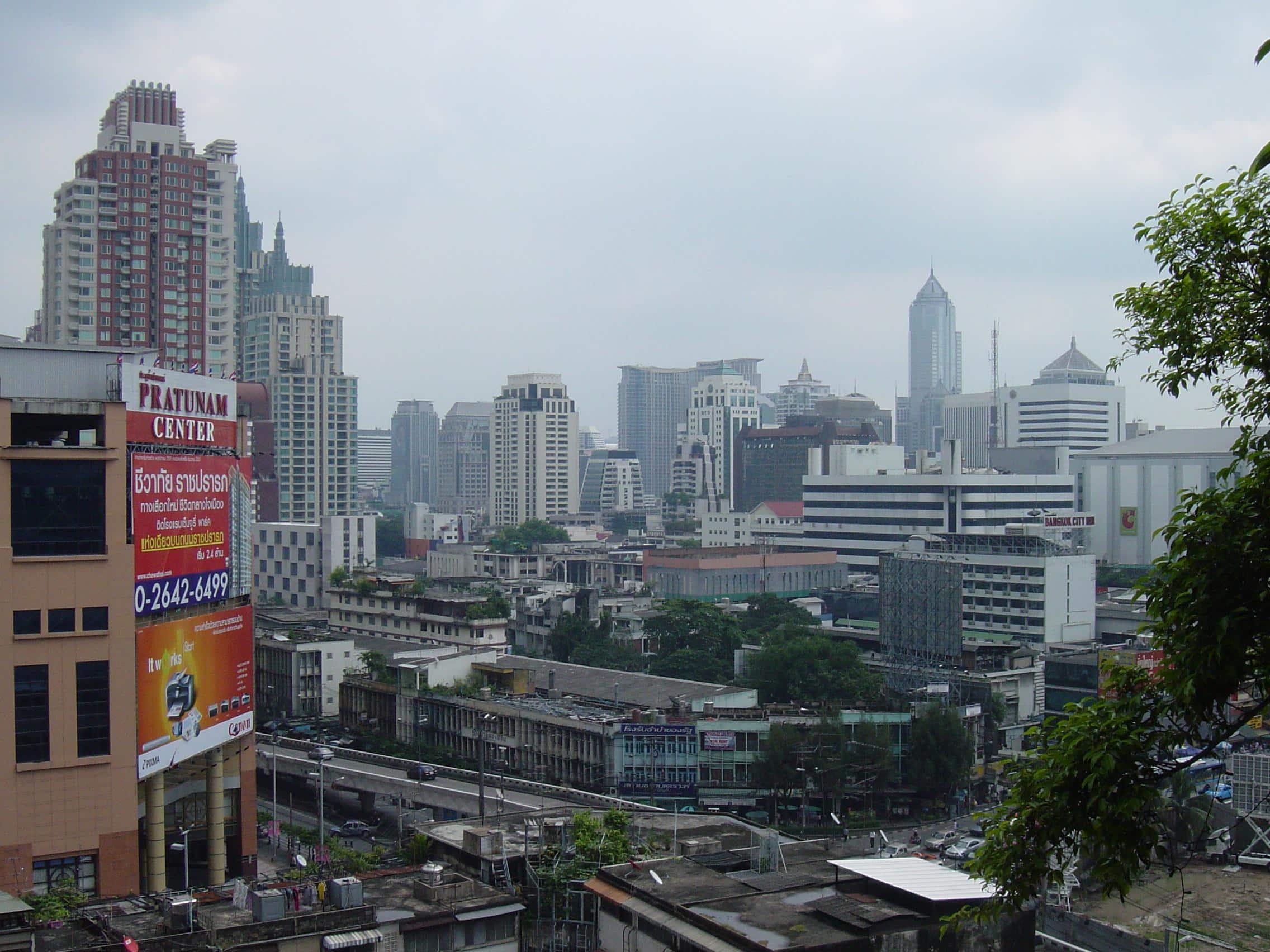
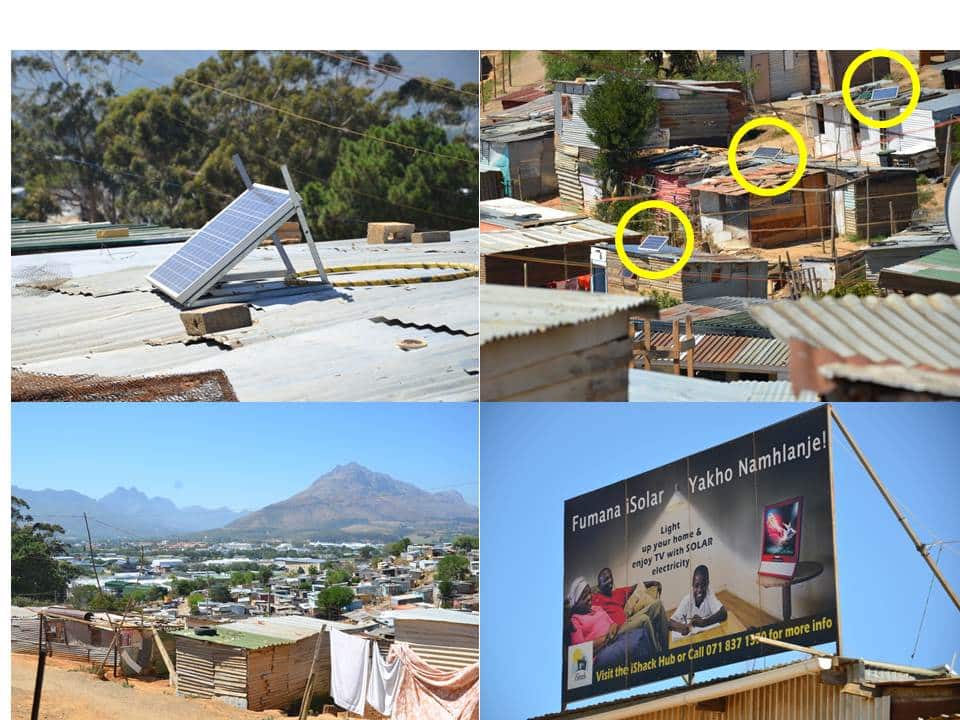
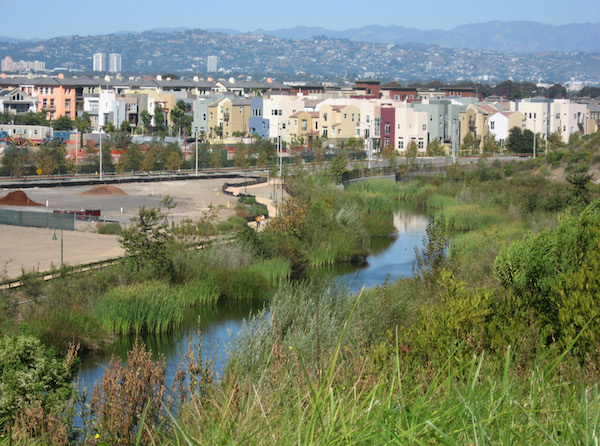
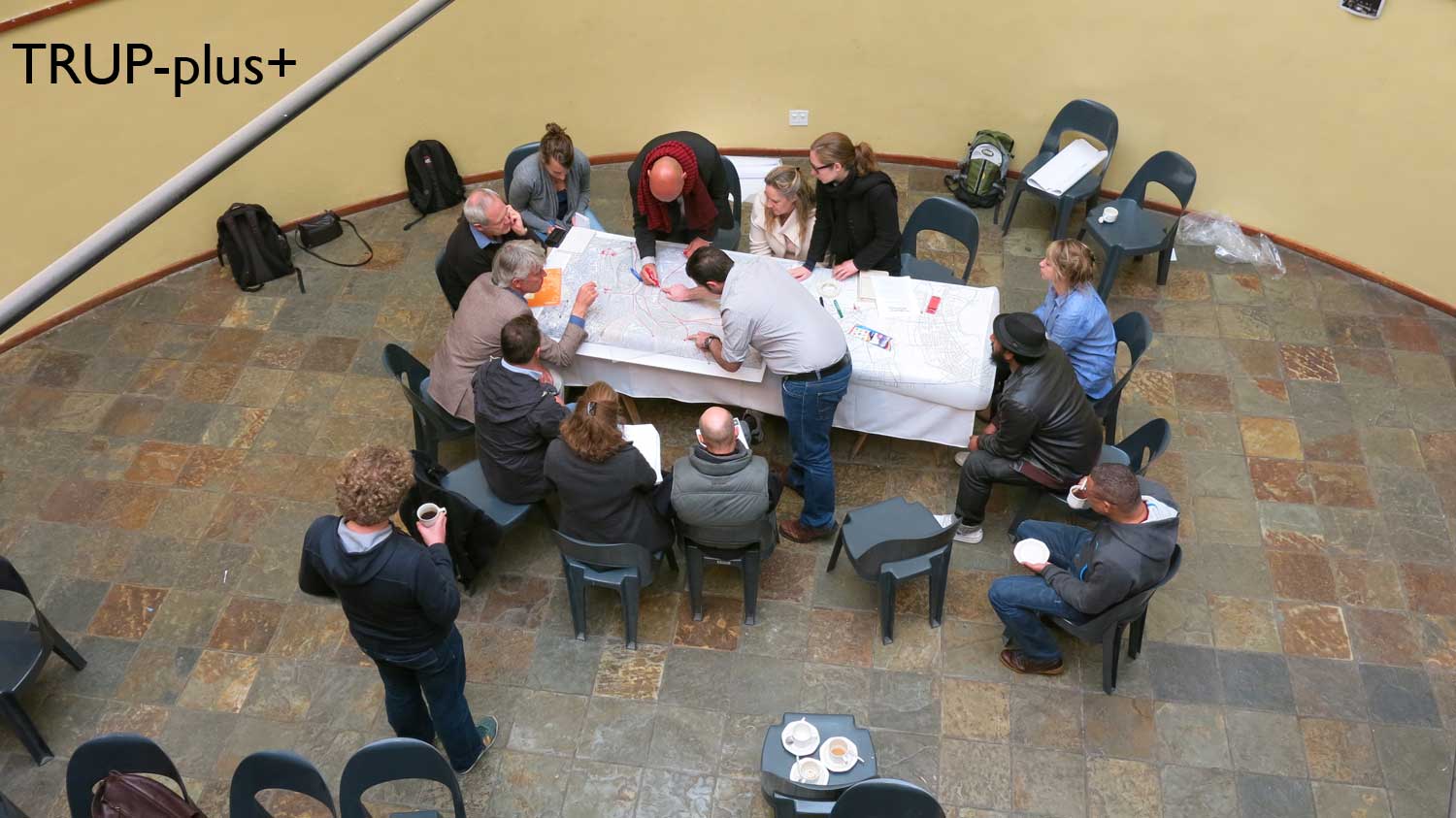
        The Density Syndicate Think Tank invites you to participate in the presentation of a seven-month project by three multi-disciplinary teams of South African and Dutch designers, city officials and researchers looking at the future of three urban sites in Cape Town. As part of the City Desired Exhibition, project contributors, key City officials and a select number of stakeholders will convene on 3 November 2014 at the City Hall to review and discuss findings. Twenty years after democracy, South African cities remain stubbornly divided, fragmented, inconvenient for the poor and uninspiring. This has manifested in cities made up of a patchwork of disconnected business districts, wealthy neighbourhoods, gated communities and poor townships. In the case of Cape Town, the affluent City Bowl and southern and northern suburbs stand in contrast to large swathes of township and informal areas. Despite considerable deracialisation of lower middle-class suburbs, the townships and informal areas remain profoundly mono-functional, racially homogenous and most vulnerable to a multiplicity of risks. It is uncontested that the current situation is socially, economically and ecologically unsustainable, yet, despite the availability of urban design expertise and policy commitment to transformation, we have very few compelling examples of how we can imagine and build our city differently. In order to explore how to address these challenges, ACC and INTI have worked with the City of Cape Town on a series of three speculative studios. By using the combined design intelligence of Dutch and South African specialists, The Density Syndicate has enabled the exploration of innovative, alternative strategies for the future of Cape Town. The symposium will shed light on the proposed scenarios and will invite key stakeholders from local government, academia and mass media to provide feedback on their appropriateness, viability and desirability. The format provides a platform for authors to exhibit the proposal and for  key ‘respondents’ to immediately interrogate proposals and raise questions for debate. Animated deliberations are expected to set the tone for an enlightening symposium. The sites studied by the Density Syndicate are the following: LOTUS PARK Lotus Park is a small informal settlement situated between the Khayelitsha-Cape Town train line and the Lotus River Canal. Lotus Park is adjacent to western forecourt of the Nyanga Junction station. The Lotus Park team focused on: maintaining existing density to avoid any relocation; consider how best to optimise mixed use (economic, social and cultural) planning; taking the Lotus River into account in advancing sustainability planning principles. MAITLAND Voortrekker Road stretches around 15km from Woodstock in central Cape Town, through Maitland, Goodwood, and Parow to Bellville. It is a busy transport corridor between Bellville and the CBD and is lined with a range of small businesses and light industry. Of particular interest to this project is the Maitland stretch of the corridor. There is a significant unrecognised African immigrant population living and running small businesses in the area and offers another kind of opportunity for exploring density and diversity in Cape Town. In particular, it offers an opportunity to explore a different model of urban regeneration to what has unfolded in the Woodstock and Salt River stretches, anchored by creative industries and high-end retail and fine dining. TRUP-PLUS + GREENFIELDS STRIP The TRUP-plus+ site is a greenfield strip that includes the Two Rivers Urban Park and the Athlone Power Station. Situated halfway between the airport and the Cape Town CBD, the decommissioned Athlone Power Station site is uniquely located between three very different suburbs: Pinelands, a predominantly middle class ‘white’ suburb; Athlone, a predominantly ‘coloured’ neighbourhood’; and Langa, a largely poor ‘black’ area. The TRUP-plus+ offers a unique opportunity of experimenting with possibilities of social integration at the nexus of these suburbs. The Density Syndicate held two studios: one in May and one in July 2014. Participants include representatives from: African Centre for Cities (SA); Cape Town Partnership (SA); City of Cape Town Spatial Planning & Urban Design (SA); Community Organisation Resource Centre (SA); dhk urban (SA); Doepel Strijkers (NL); H+N+S Landscape Architects (NL); International New Town Institute (NL); Jakupa architects + urban designers (SA); Land+Civilization Compositions (NL); Provincial Department of Human Settlements (SA); Sustainability Institute (SA); Urban Water Management Research Unit (SA); Violence Prevention through Urban Upgrading (SA); Witteveen+Bos (NL); Uberbau (GER); NL Architects (NL). Conference Programme will be uploaded soon. Watch this space!   The Density Syndicate is a think-tank initiative by the African Centre for Cities (ACC), International New Town Institute (INTI), and in collaboration with the City of Cape Town and Violence Prevention through Urban Upgrading (VPUU). It has been made possible by the City of Cape Town, the Dutch Creative Industries Fund, the Ministry of Foreign Affairs of the Netherlands and the Netherlands Consulate General, Cape Town. It is also a programmatic component for NL@WDC2014, an initiative of the Netherlands Consulate-General in Cape Town. Follow us on Facebook and Twitter @ through #DensitySyndicate or #WDC234

Kapuscinski Development Lecture: Aromar Revi

Lecture Hall 3B, New Snape Building University of Cape Town, Cape Town, South Africa

Putting the Urban at the Heart of the 2030 Sustainable Development Goals The Millennium Development Goals are expiring and need to be replaced with a new set of globally applicable and locally implementable Sustainable Development Goals (SDGs) for 2030. Climate Change negotiations are stalled and need a more determined and pragmatic approach if run-away impacts are to be avoided. It is clear that a different economic, social and human development path must be established to ensure greater sustainability and inclusion of all citizens into productive economic life and well-being. Cities and regions across the world provide the opportunity to do this. Africa and Asia are at the centre of the urban, social and economic transitions that the world will witness over the next two decades. It is important that we see political imaginations and leadership from these geographies that address local, regional and global themes. The lecture will interest policy makers, activists, business leaders, journalists and academics.  About the speaker: Aromar Revi is Director of the Indian Institute for Human Settlements (IIHS) India’s prospective independent national University for Research & Innovation addressing its challenges of urbanisation. He has been a senior advisor to various ministries of the Government of India, and has consulted for a wide range of UN, multilateral, bilateral development and private sector institutions. He is a member of the Leadership Council of the UN Sustainable Development Solutions Network (SDSN), co-chair of its urban thematic group, and a Fellow of the India China Institute at the New School, New York. A global expert on sustainable urban development, he has co-led a successful international campaign for an urban Sustainable Development Goal (SDG) as part of the UN’s post-2015 development agenda, which brought the major global urban institutions and over 200 cities and institutions together. He has led over 100 major research, consulting and implementation assignments in India and abroad. He has helped structure, design and review development investments in excess of $8 billion, including housing and urban development plans for two-thirds of India’s 29 states in the 1990s. Besides being part of multiple international projects in 6 countries, he has worked on 3 of the world’s 10 largest cities, and with communities across 25 Indian states. A leading expert on Global Environmental Change especially on Climate Change adaptation and mitigation, he is one of the Coordinating Lead Authors for the Urban Areas section of the IPCC 5th Assessment report (2014), and co-PI of an international Climate Adaptation research programme than spans India and Africa. He is one of South Asia’s leading disaster mitigation and management experts and has led emergency teams to assess, plan and execute recovery and rehabilitation programmes for 10 major earthquake, cyclone, surge and flood events affecting over 5 million people, and serves on the Advisory Board of the UNISDR Scientific & Technical Advisory Group and its Global Assessment of Risk. The Kapuscinski Development Lectures are a series of high-level lectures focused on development-related issues organized jointly by the United Nations Development Programme, the European Community and leading universities and think-tanks. There have been over 50 lectures by top development thinkers since 2009. The lectures honour Ryszard Kapuscinski, the celebrated Polish writer and journalist who covered developing countries. Past lectures have been delivered by, among others, Aung San Suu Kyi, Ashraf Ghani, Jagdish Bhagwati, Helen Clark, Jan Pronk, Jeffrey Sachs, José Antonio Ocampo, Kamal Dervis, Mark Malloch-Brown, Michelle Bachelet and Paul Collier.  See: http://kapuscinskilectures.eu The Kapuscinski Development Lecture in Cape Town is a joint initiative of the European Commission, the United Nations Development Programme, the African Centre for Cities, and the University of Cape Town. The project is funded by the European Commission. Please take your seats from 5:45 as the lecture is being streamed live and will start at 6:00 promptly. RSVP maryam.waglay@uct.ac.za using subject line "Kapuscinski Development Lecture"               

Rethinking Sustainable Cities: from slogan to implementation

Studio 5 Environmental and Geographical Sciences Building, Upper Campus, Cape Town, South Africa

ACC is excited to host representatives from Mistra Urban Futures who will be presenting on their forthcoming book entitled 'Rethinking Sustainable Cities: from slogan to implementation'. Overview Mistra Urban Futures’ forthcoming book provides detailed intellectual and practical histories of fair, green and accessible cities - three key urban characteristics chosen to symbolise the research centre’s approach, which utilises transdisciplinary co-production methodologies to promote sustainable urban solutions to specific local problems in each of its research platforms. These characteristics suffuse MUF’s work and Strategic Plan for 2016-19. David Simon will explain these agendas, focusing particularly on the origins and current nature of urban greening discourses and the challenges to implementation to ensure that they make a substantive as opposed to purely marginal or incremental difference. Sue Parnell will do likewise in relation to fair cities. Bios David Simon joined Mistra Urban Futures in September 2014 from Royal Holloway, University of London, where he still holds a part-time appointment as Professor of Development Geography. He was Head of theGeography Department there from 2008-11. He has vast international experience including grant-funded research on sub-Saharan Africa (especially Namibia, South Africa, Kenya and Ghana), Asia (especially Sri Lanka, Thailand and the Philippines), the UK and the USA. He has also served as specialist advisor to UN-HABITAT on cities and climate change, was one of only two academics on the UK Foreign and Commonwealth Office's specialist Africa Advisory Group prior to its disbandment, and has consulted for various NGOs and national and international development agencies. Furthermore, he is a Fellow of the UK Academy of Social Sciences. Susan Parnell’s early academic research was in the area of urban historical geography and focussed on the rise of racial residential segregation and the impact of colonialism on urbanisation and town planning in Sub-Saharan Africa. Since 1994 and democracy in South Africa her work has shifted to contemporary urban policy research (local government, poverty reduction and urban environmental justice). By its nature this research is not been purely academic, but has involved liasing with local and national government and international donors. Sue is also on the boards of several local NGOs concerned with poverty alleviation, sustainability and gender equity in post-apartheid South Africa. She serves on a number of national and international advisory research panels relating to urban reconstruction.

Resilient Urban Development: perspective of the Massive Small Collective

African Centre for Cities UCT Upper Campus, Cape Town, South Africa

In this Brown Bag, Lauren Hermanus will introduce the work of the Massive Small Collective, which seeks to make connections between small-scale urban sustainable development and resilience thinking. The Massive Small Collective understands resilience as social, economic and environmental sustainability under conditions of dynamic complexity. As individuals, households, businesses, and governments are faced with increasing complexity, and more frequent destructive shocks, and new information and technologies, the context and need for resilience planning and implementation is growing. The assertion of the Massive Small Collective, is that top-down, large-scale, command and control strategies aimed to improve social well-being and manage ecological risks have not delivered the promised results. The collective believes that the ‘bigness’ of these projects is the source of their weakness. Local context and history are, by necessity, rendered marginal by end-state and solutions-focused wholesale reform. But we can now see that it has showed itself to be critical to long-term success. In response, the Massive Small Collective focuses on incrementalism and redundancy, dynamic interrelation, local context, learning from failure and responsive governance.  This Brown Bag will introduce the potential of small-scale urban sustainable development initiatives and investments to contribute to the resilience agenda in cities and towns around the world. This work is done in partnership with the Centre for Complex Systems in Transition, African partners of the Stockholm Resilience Centre.  About the Speaker: Lauren Hermanus is has a BA in Politics, Philosophy and Economics, and a MA in Complexity Theory and Philosophy. She is currently enrolled in MPhil in Development Policy and Practice. She is a Sustainable Development Specialist focused on urban resilience and energy innovation. Her experience is in policy, strategy and programme development in both the public and private sectors. She is interested in applying Complexity Thinking to development challenges. Date: 28th November Time: 1-2pm Venue: Davies Reading Room (library), EGS Building, Upper Campus, UCT

Theorizing Urbanization: the Universal and the Particular in Question

Studio 3 ENGEO Building, Upper Campus. University of Cape Town,, Cape Town, Western Cape, South Africa

The African Centre for Cities is pleased to announce it's first Special Lecture for 2017. We will be hosting Prof Kevin Cox, who will be presenting a lecture on 'Theorizing Urbanization: The Universal and the Particular in Question'. Abstract Over the last twenty-five years or so urban studies has witnessed increasing skepticism towards universalizing claims and a greater interest in the particularizing. Recent arguments for a view from the global South exemplify this. This raises the question of what the relationship between universalizing and particularizing tendencies might be. This is explored firstly through an exploration of how the two might be reconciled. Two case studies then follow. One focuses on the ‘view from the South’ controversy; and the other on the politics of urban development in the US and in Western Europe and a subsequent trans-Atlantic divide. Bio KEVIN R. COX, is Emeritus Distinguished University Professor of Geography at the Ohio State University. His major research interests include the politics of urban and regional development, geographic thought and South Africa. He is the author of numerous books, the most recent of which are The Politics of Urban and Regional Development and the American Exception (2016) and Making Human Geography (2014.) He has been a Guggenheim Fellow and the recipient of two awards from the Association of American Geographers, including one for distinguished scholarship. More information can be found on his website, Unfashionable Geographies, at https://kevinrcox.wordpress.com/.  

Africa’s Cities: Opening Doors to the World

School of Economics Seminar Room 4th Floor School of Economics

SPEAKER: Somik Lall DATE: 28 February 2017 TIME: 13:00 - 14:00 VENUE: Seminar Room (4th floor School of Economics) The African Centre for Cities is pleased to be co-hosting this seminar with The School of Economics and the Cape Town Branch of the Economic Society of South Africa. Somik Lall, a lead economist from the World Bank, will be presenting on the new World Bank publication entitled, 'Africa's Cities: Opening Doors to the World. Somik Lall is a Lead Economist for Urban Development in the World Bank’s Urban and Disaster Risk Management Department. His research and policy interests span urban and spatial economics, infrastructure development, and public finance, with more than 40 publications featured in peer-reviewed journals, edited volumes, and working papers. Cities in Sub-Saharan Africa are experiencing rapid population growth. Yet their economic growth has not kept pace. Why? Somik will present his thoughts on how urban policy plays a central role in making Africa’s cities economically competitive. Links to the report and related materials: •     Report page: www.worldbank.org/africascities •     Video: https://www.youtube.com/watch?v=PtT2RA4sDMA

Soft Infrastructure: Recalibrating Aesthetics, Economies, And Urban Epistemologies

Humanities Graduate Centre Seminar Room, South West Engineering Building, East Campus, University of the Witwatersrand Johannesburg, Gauteng, South Africa

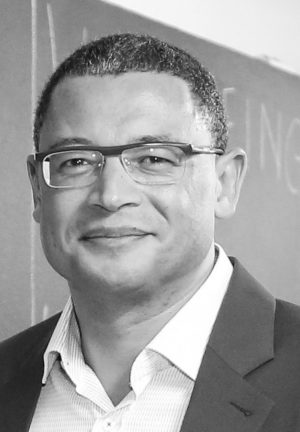
The African Academy for Urban Diversity; a joint initiative of the African Centre for Migration & Society; the African Centre for Cities; and the Max Planck Institute for the Study of Religious and Ethnic Diversity invites you to a special public lecture by Dr Mpho Matsipa (Wits City Institute, University of the Witwatersrand, Johannesburg). A city like Johannesburg offers a glimpse into how immigration, black female sexuality and shifts in urban retail economies provide important economic and cultural resources to urban residents and users. By exploring black cultural practices, like braiding, as both ontology and epistemology, the lecture will explore how such practices recalibrate local economies, infrastructures, and aesthetic codes, and thus might co-constitute emergent urban identities and a way of knowing the city. The intimate, networked, and fractal nature of black hair braiding spaces disrupts the rigid colonial spatial orders of the city and its architecture. However, can such soft infrastructures sufficiently disrupt the grand narrative of African cities in ‘crisis’, while also disrupting colonial and colonizing cartographies of African urban environment? Biography Dr Mpho Matsipa is a researcher at the Wits City Institute. After completing her professional degree in Architecture at the University of Cape Town, with a distinction in design, Mpho was awarded a Fulbright Scholarship and later, a Carnegie Grant as a graduate student at the University of California, Berkeley. Her PhD in Architecture, from the University of California, Berkeley, is titled The Order of Appearances explored the entangled geographies of urban informality, urban redevelopment and the politics of race, gender and aesthetics in Johannesburg’s inner city. Mpho has written critical essays and reviews on public art, culture and space for Art South Africa, the Architectural Review and Thesis 11 (forthcoming). Mpho has worked as an architect and she has been shortlisted in two prestigious national design competitions. She has curated several exhibitions, including of the South Africa Pavilion at the 11th International Architecture Exhibition, Venice Biennale (2008).She has been an Adjunct Assistant Professor of Architecture and associate research scholar at Columbia GSAPP and Curator of Studio-X Johannesburg –  an experimental public platform on architecture and the city sponsored by Columbia University. She is currently co-curating a pan-African architecture exhibition at the Architecture Museum in Munich titled “African Mobilities: This is not a Refugee Camp Exhibition”, that will open in April 2018. For more information and to RSVP: info@migration.org.za Date:    Thursday 9 November 2017 Time:    16:00 to 17:30 Venue:  Humanities Graduate Centre Seminar Room, South West Engineering Building, East Campus, University of the Witwatersrand

Science and Cocktails: Can We Move Beyond the Divided City?

The Orbit Johannesburg, Gauteng, South Africa

Is urban segregation simply a fact of contemporary life? Are the shopping mall and gated community to blame for new forms of urban division? What role does the real estate market play in reproducing urban patterns? Is middle-class suburbia deracializing or not? Does public investment in housing and social amenities worsen or improve urban divides? Do BRT systems help or hinder urban integration? Who, if anyone, can make a difference in altering spacial patterns of the city? It is arguable that South African cities are more divided today compared to 1994. How can this be? Why are we seemingly unable to shift the contours of division and live differently? Edgar Pieterse will review the drivers of contemporary urban divides and explore the reasons why policy after policy since 1994 say the “right” things but achieve the opposite outcome. He will place his discussion in the context of the nature of both public and private investments into South African cities and illustrate the talk with data and policy experiments in Cape Town and Johannesburg. Pieterse will conclude by putting forward what some of the preconditions for genuine urban transformation might be. Date: 28 November 2018 Time: Doors open at 18:30, no admittance after 20:00. Venue: The Orbit, Braamfontein, Johannesburg Entrance to the event: R20. No registration is necessary but guests are strongly encouraged to arrive early. Dinner is served from 18:00. Guests wishing to have dinner before the event should book in advance with The Orbit and arrive by 18:30. (Last orders for dinner at 19:15 to make it to the event). Directions to the venue.

R20

Cities and Climate Change: Seminar 1

Studio 1 Environmental and Geographical Sciences Building, Upper Campus, UCT, Cape Town, South Africa

The first seminar in the academic seminar series on Cities and Climate Change reflects on the recent international conference on cities and climate change, the first of its kind convened by the Intergovernmental Panel on Climate Change. Through a panel discussion between representatives from the City of Cape Town, the African Centre for Cities, UCT’s Climate System Analysis Group and the African Climate and Development Initiative, who all participated in the conference, we will draw out key themes and debates surfacing within the climate change and cities field internationally, as well as reflect on any notable silences or gaps. We will also share a snapshot of what inputs we offered to the international science and policy community concerned with cities and climate change. This will establish the main contours of the climate change and cities research space, framing the three subsequent seminars in the series.   SPEAKERS Victor Indasi, climate science post doc, Climate System Analysis Group (CSAG) Amy Davison, Head of Environmental Strategy Implementation, City of Cape Town Alice McClure, FRACTAL coordinator, Climate System Analysis Group Lorena Pasquini, risk governance research fellow, African Climate and Development Institute DISCUSSANT Anna Taylor, urban geography post doc, ACC & CSAG