ACC NOTRUC Seminar Series: Contesting the Coast: Infrastructure, Ecology and Coastal Planning in New Orleans and the Mississippi River Delta – Cancelled

Studio 3 ENGEO Building, Upper Campus. University of Cape Town,, Cape Town, Western Cape, South Africa

This seminar focuses on environmental politics and regional urban planning based on a paper by Dr Joshua Lewis and Dr Henrik Ernstson called Contesting the Coast: Infrastructure, Ecology and Coastal Planning in New Orleans and the Mississippi River Delta. The paper is presented by Dr Henrik Ernstson who works at ACC and is affiliated to KTH Royal Institute of Technology and The University of Manchester. The presentation will take place on 8 November 2017, at 15:00 in Studio 3, Environmental and Geographical Sciences Building, Upper Campus, University of Cape Town. Please note this seminar has been cancelled.  ABSTRACT For over 150 years two major and capital-driven projects have re-worked the vast Louisiana coastal landscape. One has centered on ‘adapting’ the landscape to compete and increase for global maritime trade, shortening the time distance from New Orleans to the Gulf of Mexico. The second has been about increasing the amount of space for real estate and urban development. However, developing large-scale water infrastructure in a vast and complex ecosystem comes with unexpected social and ecological dynamics. Indeed, our argument is that infrastructure has changed biophysical relations that have been stable for hundreds and thousands of years to fundamentally change how ecosystems operate and function with social and ecological effects. Based on in-depth historical research, we develop an analytical repertoire for understanding historical interrelationships between water infrastructure, regional environmental politics, and large-scale coastal ecosystems. By further drawing on planning theory that has striven to de-center Habermasian consensus approaches (e.g., Vanessa Watson), this paper focuses on how knowledge controversies can help not only to ‘slow down reasoning’ (sensu Isabelle Stengers and Sarah Whatmore) to include more textured and situated ways of knowing the vast and complex Louisiana coastal landscape, but also drives the making of proper political subjects (Jacques Rancière) that can interrupt and shape the wider administration of large-scale planning efforts. Our analysis shows how water infrastructure has produced persistent divisions in the body politic to hinder contemporary strategies to secure New Orleans and other settlements in the region from devastating storm surge and inundation. In a world under climate change, when novel biophysical dynamics are constantly introduced, we believe our textured case study can help to think about the new kind of politics we need to understand, from the role of ‘ecological expertise’ (now siding increasingly with ‘engineering expertise’), to how ecological dynamics are shaping political subjectivities.   MORE ON JOSHUA LEWIS & HENRIK ERNSTSON  Dr Joshua Lewis is based in New Orleans where he studies how infrastructure networks transform regional ecosystems and its effects on environmental justice and political processes. His historically grounded focus on the implementation and maintenance of large-scale water infrastructure connects between the local and the regional and across human geography, ecology and sociology. He has also developed comprehensive vegetation studies in New Orleans (linked to a comparative study in Cape Town) to understand how hurricanes and urban development shape urban ecosystems and its often-unequal effect on different social groups. He completed his PhD at the Stockholm Resilience Centre at the Stockholm University in 2015 and he is now employed at Tulane University as Research Assistant Professor at the ByWater Institute where he is leading a novel ecological monitoring project in New Orleans that tracks ecological changes associated with a major green infrastructure and stormwater management project. With his studies in political ecology and urban ecology, he also networks with partners in the Rockefeller Foundation’s 100 Resilient Cities program to deepen knowledge exchanges around urban ecology in partner cities. For more information, go here: publications.   Dr Henrik Ernstson is developing a situated approach to urban political ecology that combines critical geography, urban infrastructure studies, postcolonial urbanism and collaborations with designers, artists and activists. He has lead various projects to study collective action, environmental conflicts and urban ecosystem management in Cape Town, New Orleans and Stockholm, and infrastructure politics in Kampala. Currently he is finalizing two edited books for MIT Press and Routledge, “Grounding Urban Natures” (Ernstson & Sörlin) and “Urban Political Ecology in the Anthropo-Obscene” (Ernstson & Swyngedouw). With Jacob von Heland he has created the research-based cinematic ethnography film “One Table Two Elephants,” a film that richly surfaces the politics of nature, race, and history in a postcolonial city (71 minutes, screening 2018). In 2017 he was awarded The AXA Research Award for recognition of his innovative work on urban sustainability in the global South, which will fund a research group to study petro-urbanism and urban infrastructure in Luanda with South-South connections to Brazil and China. He holds a PhD in Natural Resource Management from Stockholm University (2008) with postdoctoral positions at Stanford University (2013-2015) and the University of Cape Town (2010-2011). He lives in Cape Town and works at the African Centre for Cities, while holding a Research Fellowship at the KTH Royal Institute of Technology in Stockholm contributing to KTH Environmental Humanities Laboratory. In August 2017 he joined The University of Manchester as part-time Lecturer in Human Geography. For more information, go here: publications and projects.  
ACC NOTRUC Seminar Series: Producing water scarcity in São Paulo, Brazil: The 2014 Water Crisis and the Binding Politics of Infrastructure

Studio 1 Environmental and Geographical Sciences Building, Upper Campus, UCT, Cape Town, South Africa

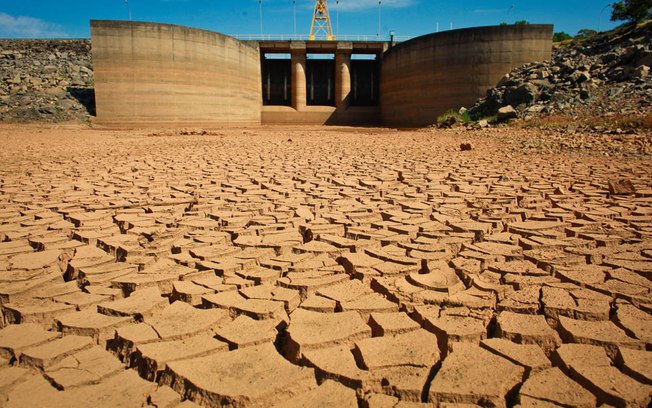
The last instalment of the annual ACC NOTRUC Seminar Series is presented by Dr Nate Millington on Producing water scarcity in São Paulo, Brazil: The 2014 Water Crisis and the Binding  Politics of Infrastructure at 15:00 in Studio 1, Environmental and Geographical Sciences Building, Upper Campus, University of Cape Town. ABSTRACT In 2014, political intransigence combined with a severe drought to push São Paulo, Brazil, to the edge of a profound water crisis. In this paper, I consider the response to the crisis on behalf of the state government, focusing on both the way that the crisis was narrated as well as responded to. I consider the suite of actions taken to cope with scarcity, focusing specifically on the state’s employment of pressure reductions in the water pipes as opposed to a formal rationing. I argue that despite the state government’s claims that only a small minority was going without water, the reality was that residents of the urban periphery were facing consistent water shortages. I argue that these shortages are representative of a form of infrastructural politics, in which the seemingly most technically viable solutions to the crisis exacerbated inequality due to the inequity that is built into the city’s hydrological infrastructure itself. I conclude by thinking of the city’s crisis as indicative of the changing nature of daily life in contemporary cities in the wake of climate change at both the local and global scale. More on the full seminar series here. More on the NOTRUC programme here.

Cities and Climate Change: Seminar 3

Studio 3, Environmental and Geographical Science Building, Upper Campus, UCT, Cape Town, South Africa

Nate Millington will present a talk entitled Making sense of our water crisis: what can we learn from São Paulo? as part of our on-going series on Cities and Climate Change on 28 May 2018, at 15:00 to 16:30 in Studio 3, Environmental and Geographical Science Building, Upper Campus, UCT. Both Cape Town and São Paulo have recently been marked by drought-induced water crises, as pre-existing infrastructures were forced to confront changing climates, continued growth, and infrastructural breakdown. These dynamics coexist in intimate ways with long histories of auto-construction, heterogeneous infrastructural development, and uneven water security. While water insecurity has long marked cities in the global south, multi-year droughts have resulted in water crises in southern cities with previously robust water management systems. Experiences of citywide scarcity in these two cities point to the increasing regularity and visibility of persistent water crisis at the global level, which is drawing new actors into new coalitions and reconfiguring existing governance patterns. The intensity of the droughts that affected São Paulo in 2013-2015 and Cape Town in 2015-17 are undoubtedly outliers, but when situated in multi-year frameworks the trends seem to suggest that water patterns in both cities are shifting in line with expanded water use and increased urbanization. This has implications not just for São Paulo and Cape Town, but also for southern cities where water insecurity is more chronic. In this seminar, we think comparatively about São Paulo’s experience of crisis and its implication both for Cape Town as well for cities more generally. We ask how São Paulo’s experience with scarcity helps us to think through and make sense of Cape Town’s ongoing crisis. At the same time, we are interested in thinking comparatively about the differences in how the two cities responded. Ultimately, our intention is to think both globally and locally: to put two these two cities in conversation while being clear that global climate change is a planetary phenomenon.   Speaker: Nate Millington Discussant: Anna Taylor Chair: Gina Ziervogel   WHEN: 28 May 2018 TIME: 15:00 to 16:30 VENUE: Studio 3, Environmental and Geographical Science Building, Upper Campus, Cape Town

Cities and Climate Change Seminar 4

Studio 3 Environmental and Geographical Science Building, Upper Campus, UCT, Cape Town, South Africa

Working at the interface of climate science, urban policy and practice: developing ideas of distillation and receptivity WHEN: 12 June 2018 TIME: 3:00 to 4:30 WHERE: Studio 3, Environmental and Geographical Science Building, Upper Campus, University of Cape Town The last seminar in the 4 part series on cities and climate change will focus on how the worlds of climate science and urban policy making and implementation are being brought closer together in ways that might support more evidence-based decision making on urban matters that are climate sensitive. Drawing primarily on the efforts of, and experiences from, the Future Resilience of African Cities and Lands (FRACTAL) project, the speakers will present ideas and practices of distilling relevant, actionable climate information and fostering greater receptivity to engaging, co-producing and acting on climate information. Central to this is the creation of city learning labs as a space for bringing together a diversity of people and knowledge to generate new thinking and possibly nudge processes of decision making in new directions. Experiences of designing and implementing such labs in Maputo, Lusaka and Windhoek will be discussed in relation to emerging concepts of distillation and receptivity. The seminar will provide an opportunity to share insights about working at science-policy-practice interfaces between those working in the climate space and those working in other urban science-policy domains, like health, water management, housing and biodiversity. CHAIR: Prof Sue Parnell SPEAKERS: Dr Chris Jack, Principal Scientific Officer, Climate System Analysis Group (CSAG), and ACDI Senior Fellow Dr Di Scott, African Centre for Cities Dr Izidine Pinto, Climate System Analysis Group

Urban Humanities Seminar Series: Prof Sophie Oldfield “High Stakes, High Hopes: Creating Collaborative Urban Theory”

Studio 3 Environmental and Geographical Sciences Building, Upper Campus, UCT, Cape Town, South Africa

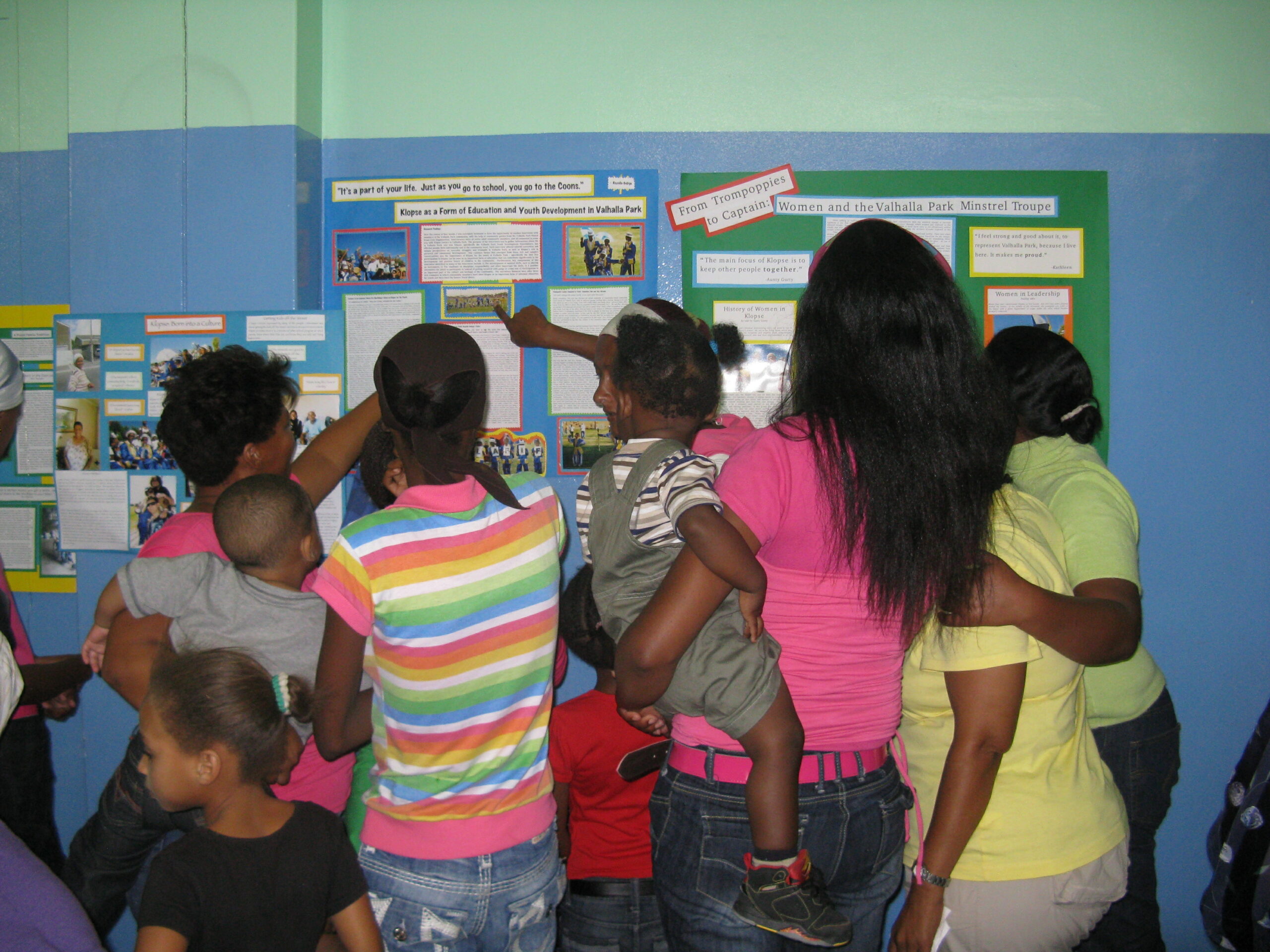
PLEASE NOTE: THIS EVENT HAS BEEN MOVED TO TUESDAY, 7 AUGUST DUE TO A CLASH WITH THE UCT MEMORIAL SERVICE FOR THE LATE PROF BONGANI MAYOSI.  ACC is excited to invite you to the first Urban Humanities Seminar Series. Prof Sophie Oldfield will be presenting a paper entitled 'High Stakes, High Hopes: Creating Collaborative Urban Theory'. ABSTRACT: High Stakes, High Hopes creates urban theory in the political and physical realities of everyday southern city life. This work examines the high stakes at play in a decade-long research and teaching partnership, which has brought this university and the neighbourhood’s civic organization in Cape Town to research the city together to collaboratively build urban theory. In narrating the project and partnership, this lecture will explore collaborative forms of urban theory, immersed in the registers, inspirations and meanings of everyday struggles and learning across the city. This approach brings together multiple voices, registers and accounts, shaping urban theory in shared spaces across the city. In this context of extreme urban inequality, this approach to theorising infuses the personal, political, and public struggles through which urban theory is generated, expertise opened up, and solidarity and commitment built. BIO: Sophie Oldfield holds the University of Basel–University of Cape Town Professorship in Urban Studies, based at the African Centre for Cities at the University of Cape Town. Her research is grounded in empirical and epistemological questions central to urban theory. Focusing on housing, informality and governance, mobilization and social movement organizing, and urban politics, her work pays close attention to political practice and everyday urban geographies, analysing the ways in which citizens and organized movements craft agency to engage and contest the state. She has a track record of excellence in collaborative research practice, challenging how academics work in and between “university” and “community.”  

Urban Humanities Seminar Series: Inclusive Cultural Governance: Integrating artistic and cultural practices into national urban frameworks by Avril Joffe

Studio 3 Environmental and Geographical Sciences Building, Upper Campus, UCT, Cape Town, South Africa

Join African Centre for Cities for the second seminar the second seminar in our Urban Humanities series, Zayd Minty will be responding to Avril Joffe talking about Inclusive Cultural Governance: Integrating artistic and cultural practices into national urban frameworks  WHEN: 16 August 2018 TIME: 15:00 to 16:30 VENUE: Studio 3, Environmental and Geographical Science Building, Upper Campus, University of Cape Town. SPEAKER Avril Joffe is an economic sociologist with experience in the field of cultural policy, culture and development and the cultural economy. She is the head of the Cultural Policy and Management Department at the Wits School of Arts, University of the Witwatersrand in Johannesburg.  Avril is an active member of UNESCO’s Panel of Experts for Cultural Policy and Governance undertaking missions to support African governments in developing cultural policies, cultural industry strategies, reporting on their implementation of the UNESCO Convention, writing and editing training manuals and recently contributed to the Global Monitoring Report 2018 on the ‘Integration of Culture in Sustainable Development’. Avril is a member of the South African Ministerial Review Panel to draft a revised cultural policy for South Africa.  She is on the board of the National Arts Council and chairs the Audit and Risk Committee for the NAC. RESPONDENT Zayd Minty is a professional cultural development manager and curator.  He has previously, since 1993, worked in and with the cultural sector, civil society, academia and government, in various leadership roles.  In addition to cultural policy and strategy work, he has curated various arts projects and festivals. He is currently registered at the African Centre for Cities doing a doctorate looking at Cultural Clusters and Urban Development in the Johannesburg Inner City.

Urban Humanities Seminar Series: Vital Geopolitics by Gerry Kearns

Studio 3 Environmental and Geographical Sciences Building, Upper Campus, UCT, Cape Town, South Africa

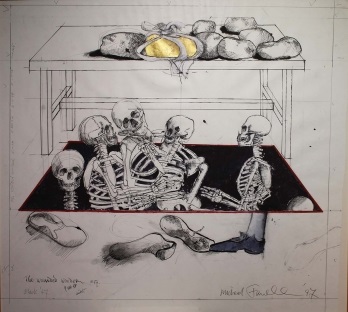
Vital Geopolitics is the study of international relations from the perspective of life itself. Colonialism and neoliberalism are not only economic forces, they shape social reproduction and the geography of labour power. Viewed in this way, demography and gender, famine and migration, intellectual property and extortion, suicide and capital punishment share a profound set of mutual determinants. Tracing marginality as a set of biological relations reveals some of the links between, for example, primitive accumulation and the Anthropocene. Gerry Kearns is Professor of Human Geography at Maynooth University, Ireland, and a Member of the Royal Irish Academy. His is the author of Geopolitics and Empire (Oxford University Press 2009) and co-editor of Spatial Justice and the Irish Crisis (Royal Irish Academy 2014). WHEN: Tuesday, 18 September 2018 TIME: 15:00 to 16:30 VENUE: Studio 3, Environmental and Geographical Science Building, Upper Campus, UCT IMAGE CREDIT: Michael Farrell, Wounded Wonder, Mixed media on paper, 96.5 x 105 cm.

Urban Humanities Seminar Series: The Invention of the ‘Sink Estate’: Consequential Categorization and the UK Housing Crisis

Studio 3 Environmental and Geographical Sciences Building, Upper Campus, UCT, Cape Town, South Africa

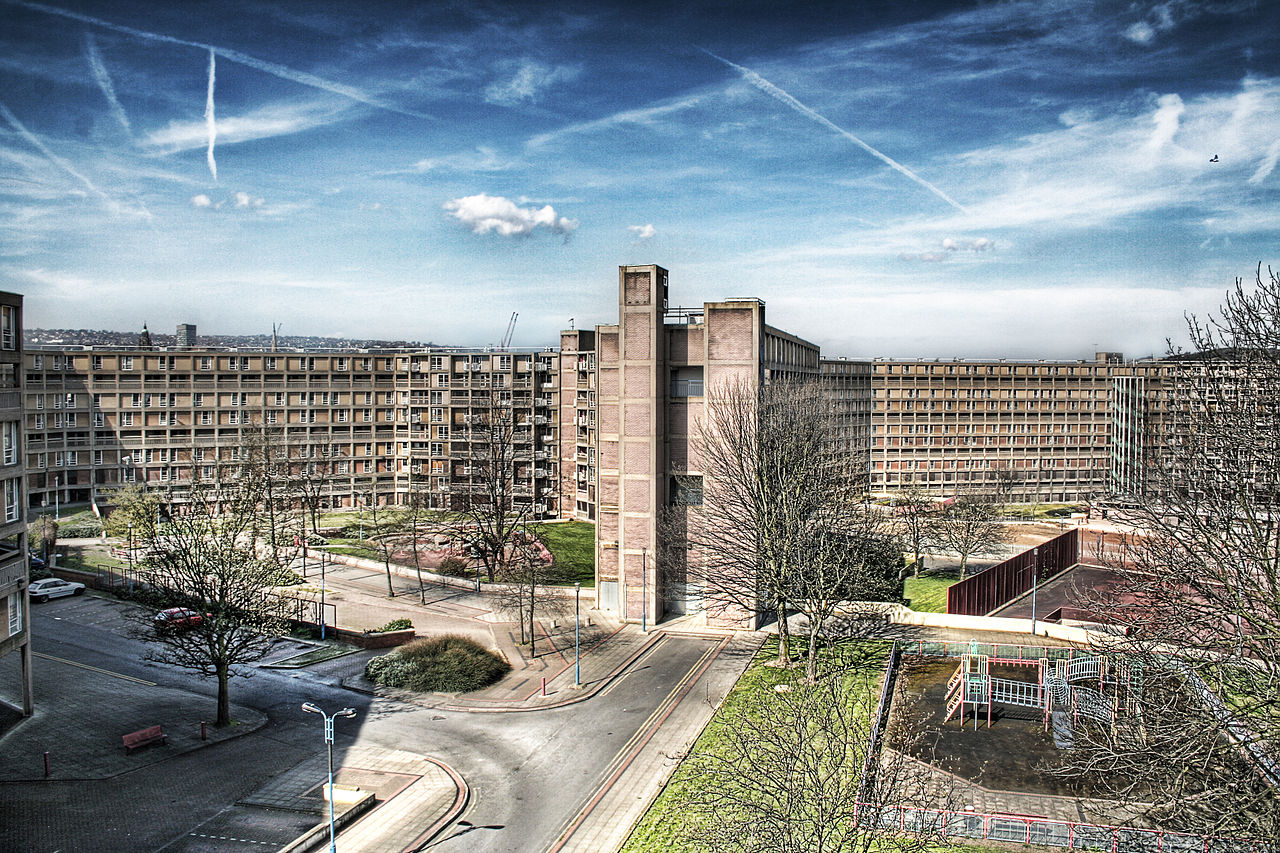
The Invention of the ‘Sink Estate’: Consequential Categorization and the UK Housing Crisis presented by Tom Slater explores the history and traces the realisation of a category that was invented by journalists, amplified by free market think tanks and converted into policy doxa (common sense) by politicians in the United Kingdom: the ‘sink estate’. This derogatory designator, signifying social housing estates that supposedly create poverty, family breakdown, worklessness, welfare dependency, antisocial behaviour and personal irresponsibility, has become the symbolic frame justifying current policies towards social housing that have resulted in considerable social suffering and intensified dislocation. The article deploys a conceptual articulation of agnotology (the intentional production of ignorance) with Bourdieu’s theory of symbolic power to understand the institutional arrangements and cognitive systems structuring deeply unequal social relations. Specifically, the highly influential publications on housing by a free market think tank, Policy Exchange, are dissected in order to demonstrate how the activation of territorial stigma has become an instrument of urban politics. The ‘sink estate’, it is argued, is the semantic battering ram in the ideological assault on social housing, deflecting attention away from social housing not only as urgent necessity during a serious crisis of affordability, but as incubator of community, solidarity, shelter and home. WHEN: Thursday 20 September 2018 TIME: 15:00 to 16:30 VENUE: Studio 3, Environmental and Geographical Science Building, Upper Campus, UCT  

Urban Humanities: Conversations on cultural mapping and planning

Studio 3 Environmental and Geographical Sciences Building, Upper Campus, UCT, Cape Town, South Africa

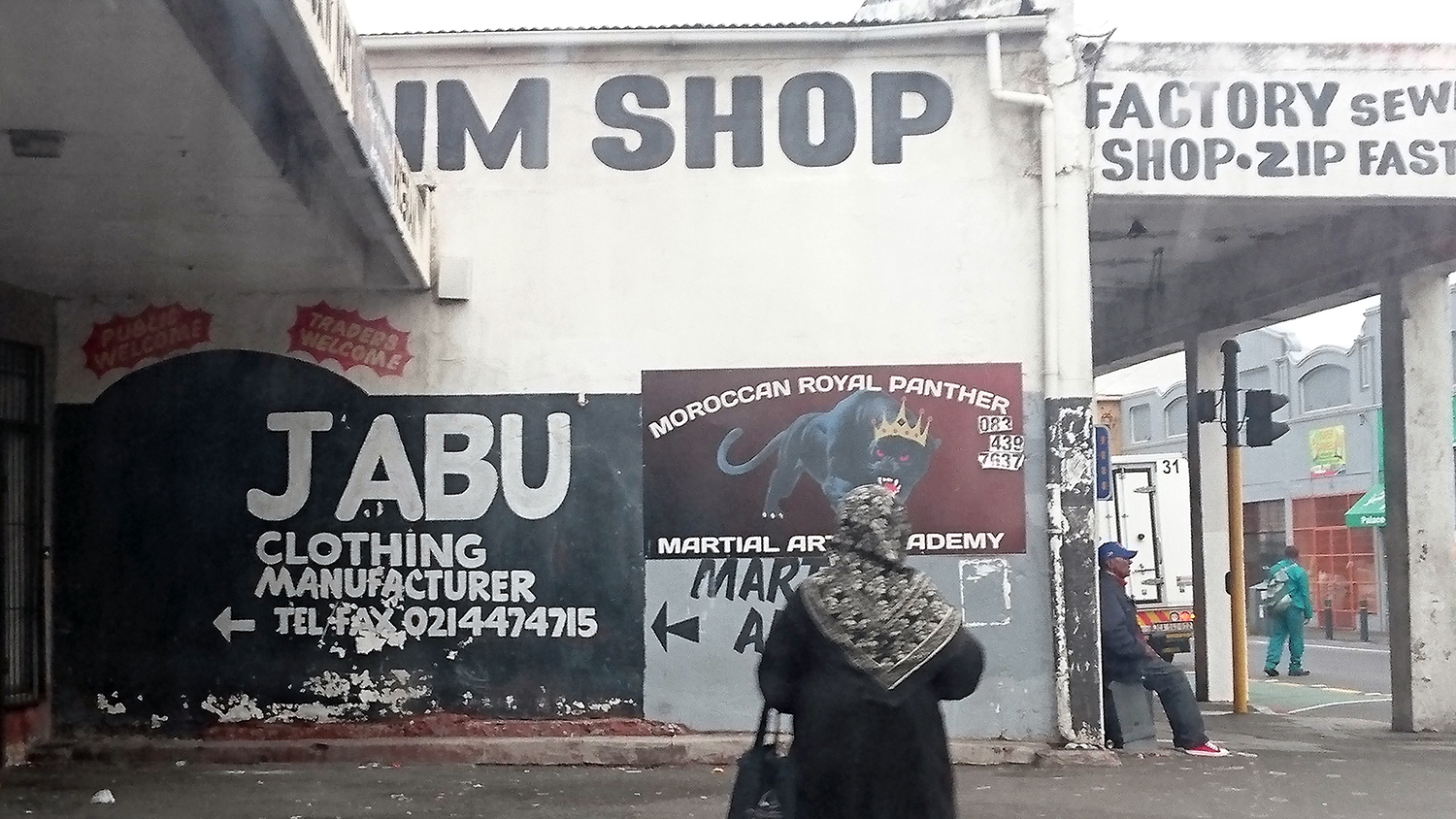
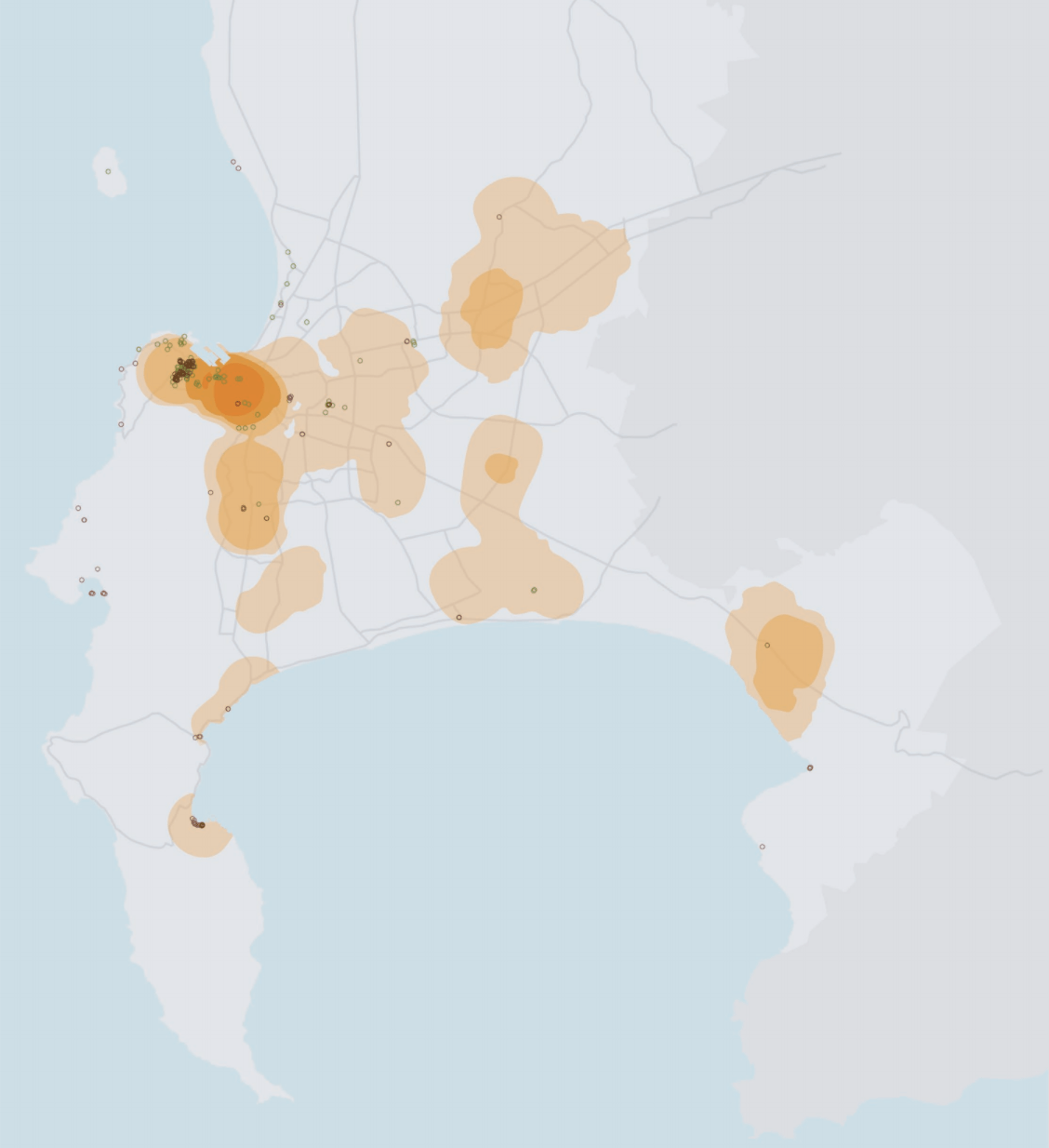
“Cultural planning sits at the intersection of people, places and policies— It provides a framework for addressing the needs and objectives of a city’s cultural sector and cultural life including arts, culture and heritage groups and practitioners that shape a city’s cultural ecosystem.”   Dr Rike Sitas will facilitate a discussion between three panelists that will look at how cultural mapping and planning responds to different research contexts depending on the questions asked and the way in which every day cultural practises unfold in different communities, namely, Hanover Park and Mannenberg, Cosmo City and Mitchells Plain. The overall aims of this research is to unearth some of the cultural practises and narratives in deprived communities in South African cities and how people navigate and express themselves despite the lack of material resources and services. These types of research projects also help to inform policy around arts and cultural services for local government.   BIOS Shamila Rahim is a cultural worker and activist who has worked extensively in the Arts, Cultural and Heritage sector in Cape Town for the last 25 years. Currently she works at City of Cape Town as a Professional Officer in the Arts and Culture Branch. Her interests are in understanding and using arts, culture and heritage as agents to facilitate mind set change which empower the individual to voice and become active in creating positive narratives of themselves and society as a whole.   Vaughn Sadie is a conceptual artist, educator and researcher, living and working in Cape Town (South Africa). He is currently registered in the PhD Programme at the Urban Futures Centre at the Durban University of Technology and work at African Centre for Cities as a researcher. He is interested in interdisciplinary and participatory practices, and the place of art in various social contexts.   Alicia Fortuin is a Masters Graduate from the School of Architecture and Planning where she completed her Masters degree in City and Regional Planning. Her Dissertation looked at the Spaces of and for Participation in the Restitution of land in District Six. It is through this research process where her interests in urban governance, rights, community participation and healing and memory evolved. She has most recently received the Pan African College Phd Scholarship at the African Centre for Cities, where she will be embarking on a PHD journey which will look at the impacts and of land use dynamics and urban sprawl on young professionals in Cape Town.