Academic Seminar: The edge economies of migration

Davies Reading Room Room 2.27, Environmental and Geographical Science, UCT, Cape Town, Western Cape, South Africa

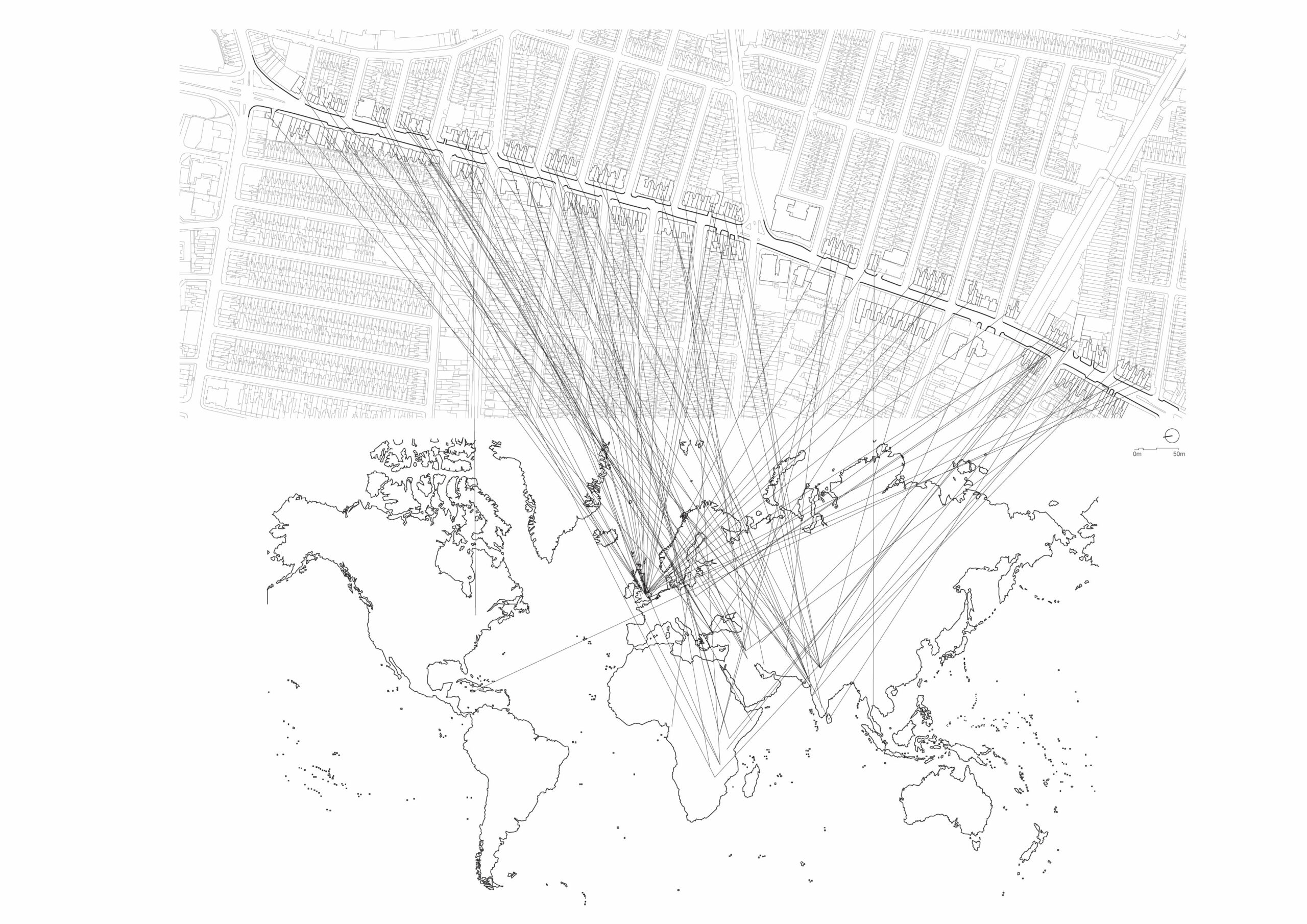
Join ACC as we host Suzanne Hall for a special academic seminar entitled The edge economies of migration on Tuesday, 25 February 2020 from 12:30 to 14:00 in the Davies Reading Room, Environmental and Geographical Sciences Building, Upper Campus, UCT. Camalita Naicker, of the Department of Historical Studies, University of Cape Town will act as a respondent. ABSTRACT ‘Edge Economies’ emerge in the asymmetries of global migration and the ongoing ferocities of urban marginalisation. From the grounded perspective of street economies formed in the peripheries of post-industrial UK cities, I explore the racialised frameworks of citizenship and economic inequality and their everyday contestations. I locate the global and urban formations of the edge in the European ideologies of displacement and immobility, incorporating the extended coloniality of political interventionism and human subordination. By moving between spaces of globe, state and street, I further explore the edge as a capricious space in which social sorting, cultural intermixtures and claims to difference are forged. Such combinations encourage connections between the histories and geographies of how people and places become bordered, together with practices of edge economies that are both marginal and transgressive. BIOGRAPHY Suzanne Hall is a Co-director of the Cities Programme and Associate Professor in Sociology at the LSE. Suzi’s research interests engage with the street life of brutal borders, migrant economies and urban multi-culture. WHEN: Tuesday, 25 February 2020 TIME: 12:30 - 14:00 VENUE: Davies Reading Room, Environmental and Geographical Sciences Building, Upper Campus, UCT  

Knowledge in Action for Urban Equality (KNOW): The challenges of translocal knowledge co-production

Davies Reading Room Room 2.27, Environmental and Geographical Science, UCT, Cape Town, Western Cape, South Africa

Join ACC as we host Caren Levy, Camila Cocina and Alex Frediani from KNOW on Friday, 15 November, 12:30 to 14:00, in the Davies Reading Room, Environmental and Geographical Sciences Building, Upper Campus, UCT. This talk, chaired by Vanessa Watson will introduce the KNOW programme, a 4-year research and capacity building programme funded by GCRF which works with 13 organisation across 12 cities in Africa, Asia and Latin America.  The talk will reflect on its partnerships, operational principles and the interface between research and practice.  It will draw on the KNOW work done so far as it approaches the end of its second year.  We hope that this session will open up an opportunity to exchange experiences of collaborative initiatives addressing urban equality. WHEN: Friday, 15 November 2019 TIME: 12:30 to 14:00 VENUE: Davies Reading Room, Environmental and Geographical Science Building, Upper Campus, UCT   BIOGRAPHIES Caren Levy is the Principal Investigator (PI) on the GCRF funded project, Knowledge in Action for Urban Equality (KNOW), and Professor of Transformative Urban Planning at The Bartlett Development Planning Unit, UCL. Her research focuses on community-led approaches to planning and governance of transport and infrastructure, housing and land in cities in the global South. Levy has a special interest in the institutionalisation of social justice in policy and planning, particularly related to the cross-cutting issues of gender, diversity, and environment. She has 35 years’ experience of teaching, research, training and consultancy, developing innovatory approaches to planning methodology, planning education and capacity-building. Her works engages with communities, governments and international organisations both in London and abroad in a range of countries in Africa, Asia, Latin America, and the Middle East. Camila Cocina is a Research Fellow in the working package 'Translating Research into Practice' for KNOW. We focus on investigating the challenges of knowledge translation processes at the global and local levels, and support city research partners to influence policy and planning practices. Cocina is an urbanist and architect with a PhD in Development Planning and MSc Building & Urban Design in Development, from The Bartlett Development Planning Unit, University College London. She's worked as a practitioner, researcher, and teacher in Chile and the UK, with experience of fieldwork and teaching in Latin America, Asia, Europe, and Africa. Her practice has focused primarily on urban development, housing policies, participatory urban design, urban informality, and housing reconstruction; and she's worked both in academic institutions as well as in independent NGOs. She has a special interest in linking research, advocacy, planning practices, and policies. Cocina's PhD research focused on the challenges faced by housing policies in reducing urban inequalities, in the Chilean context. Alex Frediani is a Senior Lecturer at The Bartlett Development Planning Unit. He also co-direct the MSc in Social Development Practice and direct the DPUs communications. In KNOW, he leadsWork Package 4, which focuses on translating research into practice to advance urban equality. His research interests include the application of Amartya Sen’s Capability Approach in development practice; participatory planning and design; as well as housing and informal settlement upgrading. Frediani has collaborated with academics and grassroots collectives in Brazil, Ecuador, Ghana, Nigeria, Sierra Leone, Kenya, and South Africa. Apart from research and action learning initiatives, he has provided consultancy for international development donors and agencies such as Oxfam, Comic Relief, Practical Action and UNDP. He is a founding and board member of the Sierra Leone Urban Research Centre (SLURC). He is also on the board of Habitat International Coalition and an associate of Architecture Sans Frontières–UK.  

MPhil Southern Urbanism – a celebration of the first cohort

Davies Reading Room Room 2.27, Environmental and Geographical Science, UCT, Cape Town, Western Cape, South Africa

Join us to celebrate and share the work of the first cohort of MPhil Southern Urbanism graduates, along with their first year colleagues. WHEN: Thursday, 7 November TIME: 14:00 to 17:00 with drinks and snacks afterwards VENUE: Davies Reading Room, EGS Building, UCT RSVP by Monday 4 November, to khaya.salman@uct.ac.za PROGRAMME Reflections on Thesis Work: 2nd Year Graduating MPhil Students Thesis research artefacts Fieldwork stories Arguments and contributions Finding a voice in urban studies Discussion Forthcoming Thesis Research: 1st Year Students Discussants: Anna Selmeczi – Mphil Southern Urbanisms Convenor Sophie Oldfield – Professor of Urban Studies Edgar Pieterse – Director ACC, Professor of Urban Policy

The city/psychosis nexus beyond epidemiology and social constructivism

Davies Reading Room Room 2.27, Environmental and Geographical Science, UCT, Cape Town, Western Cape, South Africa

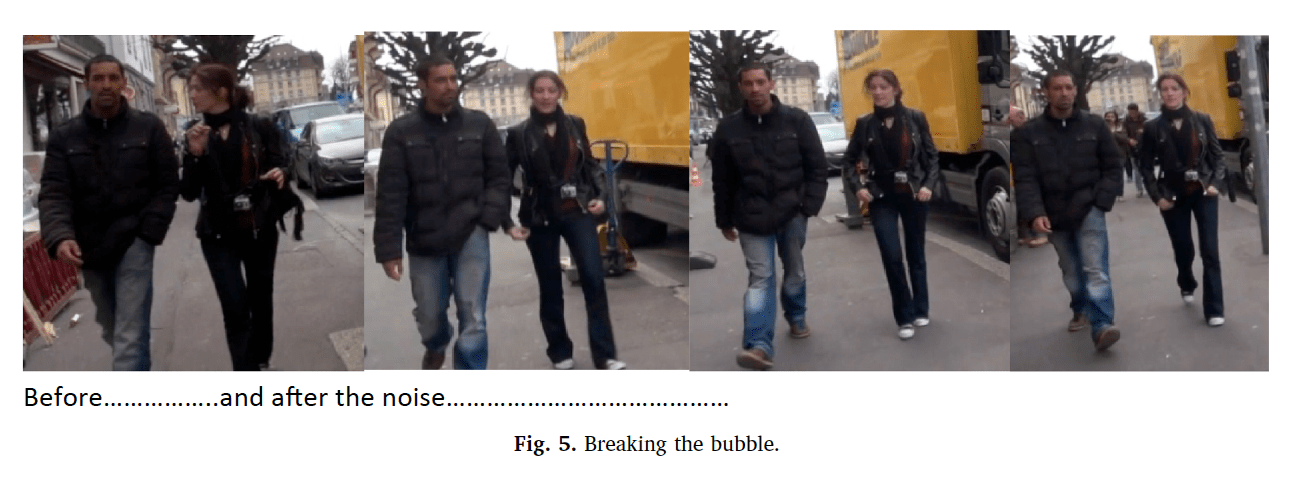
Visiting scholar Ola Söderström from University of Neuchâtel, Switzerland presents a lecture entitled: The city/psychosis nexus beyond epidemiology and social constructivism on Tuesday, 15 October from 12:30 to 14:00. ABSTRACT My talk draws on a recently completed interdisciplinary research project involving geographers, psychiatrists and linguists in the study of the relations between urban living and psychosis. Our research originates in the now long-standing observation that there is a higher prevalence of cases of psychosis in dense urban areas. Particularly interesting in the context of this talk and discussion at the ACC is that recent epidemiological studies point to the fact that this phenomenon is generally not observed in cities of the Global South. What was for long described as a universal relation between mental health and urbanism has now been provincialized. My aim will be first to explain why the question of the city/psychosis nexus has recently come to the fore not only in epidemiological research in psychiatry but also in the more-than-constructivist approaches of scholars trying to identify and practice new alliances between the life and the social sciences. Second, I will walk you through two moments – an epistemic and an ontological one – in our research process to describe how we explored such new alliances by co-designing and co-experimenting across disciplines. Thirdly, I will discuss our research findings and how they emerged from methodological triangulations. I will conclude by evoking present developments of this interdisciplinary process and how they relate to contemporary discussions on the study of bio-social entanglements. ABOUT Ola Söderström is professor of social and cultural geography at the University of Neuchâtel, Switzerland. His work draws on science and technology studies, postcolonial urban studies and visual studies. His research has notably analysed the role of visual representations in urban planning, urban policy mobilities in cities of the Global South, smart urbanism, and the relations between urban living and psychosis. His books and edited collections include: Des images pour agir. Le visuel en urbanisme, Payot, 2000; Cities in Relations. Trajectories of Urban Development in Hanoi and Ouagadougou, Wiley-Blackwell, 2014; Reshaping Cities. How Global Mobility Transforms Architecture and Urban Forms, Routledge, 2009 (co-edited with Michael Guggenheim); Critical Mobilities, Routledge, 2013 (co-edited with Shalini Randeria, Didier Ruedin, Gianni D’Amato and Francesco Panese). WHEN: Tuesday, 15 October 2019 TIME: 12:30 to 14:00 VENUE: Davies Reading Room, Environmental and Geographical Science Building, Upper Campus, UCT

Collapse: Grey development and fake buildings in Nairobi

Davies Reading Room Room 2.27, Environmental and Geographical Science, UCT, Cape Town, Western Cape, South Africa

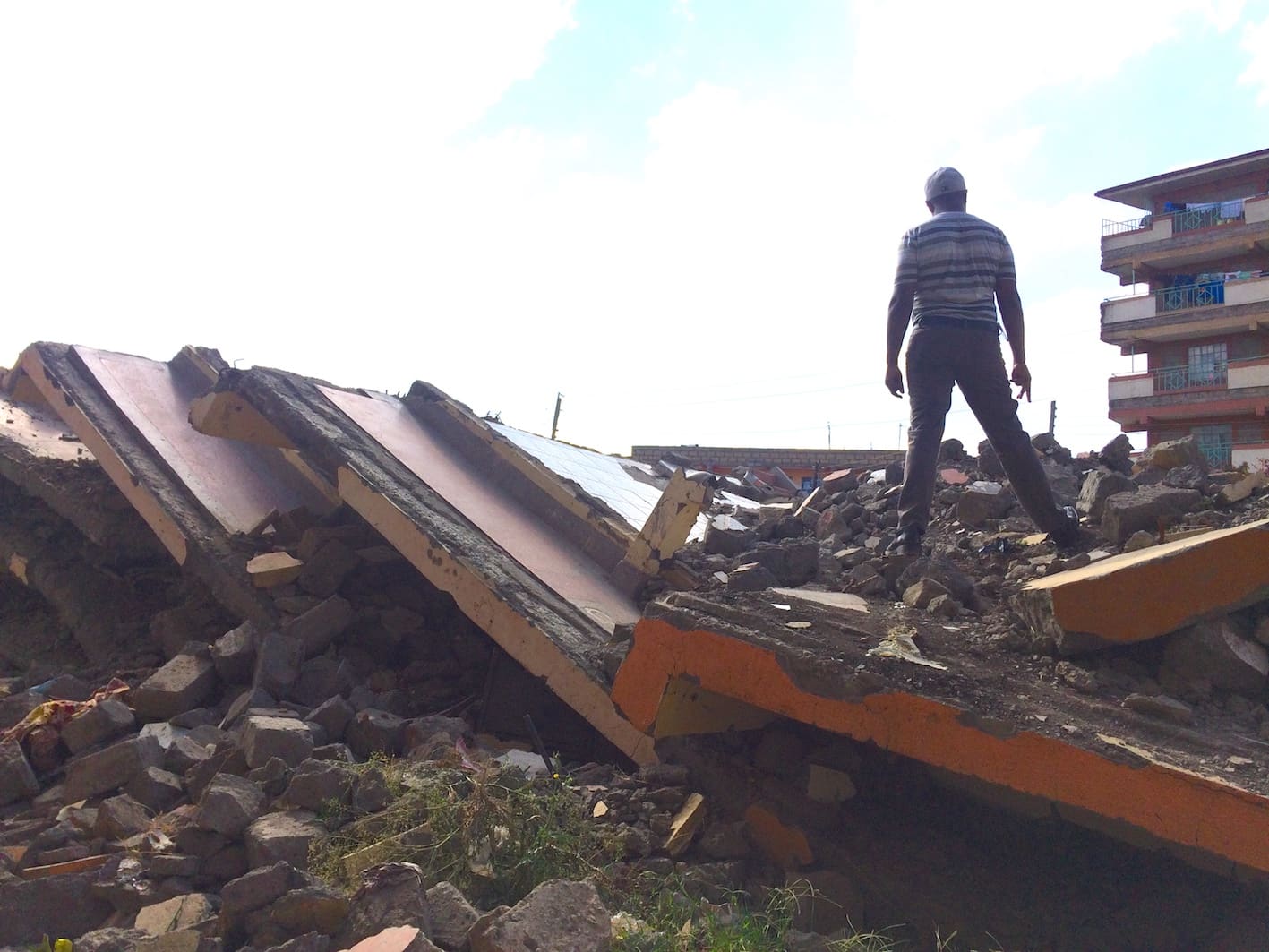
Visiting scholar Constance Smith from Social Anthropology at The University of Manchester presents Collapse: Grey development and fake buildings in Nairobi, on Tuesday, 8 October 2019, at 15:00. ABSTRACT Nairobi has recently experienced a spate of residential tower block collapses resulting in significant casualties. In an attempt to understand this precarious architecture, I juxtapose two different, yet linked, construction booms currently reshaping the city. The Kenyan government development rubric Vision 2030 is re-envisioning Nairobi as a ‘world class’ city of spectacular infrastructure and gleaming high-rise buildings. At the same time, ad hoc property speculation is constructing high density, poor-quality tower blocks that pose a high risk of structural failure; buildings that Nairobians often describe as ‘fake’. Drawing on literature in African Studies about the power of fakes and the counterfeit, as well as on recent debates in Urban Studies problematising informality, I reflect on Nairobi’s drastic landscape of architectural failure, and how this is entangled with larger processes of urban transformation. ABOUT Constance Smith is a UKRI Future Leader Fellow in Social Anthropology at the University of Manchester, UK, where she also works within the Urban Institute. Her work explores the social, political and material dynamics of urban landscapes in times of transformation. She has done fieldwork in Nairobi, Addis Ababa, Kampala and London. Her new book, Nairobi in the Making: Landscapes of time and urban belonging (James Currey, 2019) explores how the residues of colonial architecture shape self-making and city-making in contemporary Nairobi. WHEN: Tuesday, 8 October 2019 TIME: 15:00 - 16:30 VENUE: Davies Reading Room, Environmental and Geographical Science Building, Upper Campus, UCT

SDG Seminar Series: Financing the SDGs in African cities?

Davies Reading Room Room 2.27, Environmental and Geographical Science, UCT, Cape Town, Western Cape, South Africa

The fourth instalment of the ACC SDG Seminar is presented by Liza Rose Cirolia on Wednesday, 19 June 2019 at 12:30 to 14:00 in the Davies Room, Environmental and Geographical Sciences Building, Upper Campus, UCT. Entitled Financing the SDGs in African cities?, her seminar will explore the fiscal constraints and opportunities for local government to participation in global agendas. WHEN: Wednesday, 19 June 2019 TIME: 12:30 to 14:00 VENUE: Davies Room, Environmental and Geographical Sciences Building, Upper Campus, UCT.

How data-ready are African governments to monitor SDG progress?

Davies Reading Room Room 2.27, Environmental and Geographical Science, UCT, Cape Town, Western Cape, South Africa

UCT Datafirst Manager Lynn Woolfrey presents How data-ready are African governments to monitor SDG progress? Zambia and Zimbabwe reviews on Wednesday, 15 May at 12:30 to 14:00 in Davies Library, Environmental and Geographical Science Building, Upper Campus, UCT. ABSTRACT It is clear from the development literature that Sustainable Development Goal (SDG) plans must include the building of efficient development data ecosystems (OECD, 2015, p. 16). Such systems can provide governments with country-level indicators for SDG planning and monitoring. For example, the UN Economic Commission for Africa’s Africa Data Consensus suggests that official and other data producers partner to create an international data ecosystem for development planning (UNECA, 2015, p. 2).  In 2017 the UN Development Programme (UNDP) adopted such an ecosystems approach to conduct data audits with African governments. The audits assess a government’s “SDG indicator readiness”- whether accurate and current data is available to compile their SDG indicators – and investigate causes and solutions. The UNDP has found ecosystems mapping useful to expose the causes of poor quality national statistics, such as inadequate funding and bureaucratic resistance to change (Menon, 2017, pp. 12-13, 20). This seminar presents the findings of two SDG indicator readiness audits, in Zambia and Zimbabwe, and comment on the outcomes, and the value and shortcomings of these audits for development data capacity-building in African countries. WHEN: Wednesday, 15 May 2019 TIME: 12:30 to 14:00 VENUE: Davies Library, Level 2, Environmental and Geographical Science Building, Upper Campus, UCT.

UN Sustainable Development Goals Target 11: Urban Indicators Pilot

Davies Reading Room Room 2.27, Environmental and Geographical Science, UCT, Cape Town, Western Cape, South Africa

UN Sustainable Development Goals Target 11: Urban Indicators Pilot – City of Cape Town     This pilot study sought to test the proposed indicators for Goal 11 of the UN Sustainable Development Goals that succeed the Millennium Development Goals. Goal 11 marks the first explicit urban goal: To Make Cities and Human Settlements inclusive, safe, resilient and sustainable. The ACC was appointed by Mistra Urban Futures to test the Goal 11 indicators in Cape Town and partnered with Palmer Development Group (PDG) and the City of Cape Town (CCT) to do so, as part of a larger pilot process in five cities worldwide. The pilot tested each proposed indicator against four parameters: data availability, measurability, utility and custodianship. It used an indicator specification format with which PDG engaged with a CCT team, who in turn engaged with internal CCT stakeholders on the feasibility and usefulness of the indicators and collected data from them for analysis. The findings show that there are limitations regarding the informal context that characterises significant facets of the CCT, the type of data that the CCT has at its disposal and the regularity with which it is able to access household and population data. However, the majority of primary indicators are measurable and valuable and with improved collaboration with Statistics South Africa these will be increasingly measurable. Across the five cities it emerged that there are great gaps and concerns, in terms of universality, common international standards and coherence of reporting mechanisms. The pilot also demonstrated the tension in striking a balance between reducing the number of indicators and increasing the policy relevance. The CCT found that being part of the research pilot was valuable for the CCT in a range of ways including internal CCT learnings and the direct influence on future CCT indicator work; CCT’s access to current indicator thinking, processes, tools and resources, as well as the insights for CCT in terms of urban sustainable development priorities and challenges and how these are being managed by other cities. The pilot study has demonstrated the importance of having undertaken live testing of the draft targets and indicators for Goal 11 in a set of diverse secondary and intermediate cities. If the urban SDG is to prove to be a useful tool to encourage local and national authorities alike to make positive investments in the various components of urban sustainability transitions as its proponents and developers intend, then it is vital that it should prove widely relevant, acceptable and practicable. Key recommendations from the final report to achieve these aims will be discussed. This seminar will be presented by the following members of the pilot study team: Nishendra Moodley was the PDG project lead and lead researcher for the pilot in Cape Town. He is a director of PDG and Chairperson of its Board. Carol Wright was the City Lead of the USDG pilot, and co-ordinated the inputs from the City of Cape Town. Carol is Manager of Development Information in the City of Cape Town. Natasha Primo provided the alignment to the current CCT indicator and related work and active links to the City’s indicator working group which she leads. Natasha is the Head: Policy and Research in the DI&GIS Department of the CCT. Helen Arfvidsson has been the lead researcher for the Mistra Urban Futures' Pilot Project to test potential targets and indicators for the urban sustainable development goal 11 across 5 cities.    

POSTPONED!!! _ Relationship between Infrastructure Planning and Implementation in the Global South

Davies Reading Room Room 2.27, Environmental and Geographical Science, UCT, Cape Town, Western Cape, South Africa

"Incipient thoughts about the Relationship between Infrastructure Planning and Implementation in the Global South" Current thinking on the relationship between infrastructure planning and effective implementation tends to stress the completion of a hierarchy of planning tasks well ahead of the year in which implementation must begin. This implies a process  of multi-year budgeting and knowing precisely what is to be done 3 to 4 years in advance of it actually happening. The general underpinning philosophy is that establishing implementation “certainty” well in advance is a necessary  pre-condition for successful implementation (usually defined as spending the budget allocated within the designated allocation period). Changing the game plan is seen as potentially catastrophic for implementation efficiency unless these changes are to be implemented 3 to 4 years in the future. As a consequence the delivery process becomes very rigid and it is difficult for politicians, communities and practitioners to make a practical difference because things are bespoken for well in advance. The model is also very demanding of planners and implementers alike, and often assumes the availability of reliable data for planning and the availability of competent professionals to effect delivery. In the developing world retaining rigidity in planning and implementation  is difficult in the context of volatile political and institutional environments. Moreover the reliability of planning information is often questionable. In any event planning and implementation processes in the developing world often need to be a lot more responsive and flexible than current established methodologies allow. There is as a consequence a need to develop and test new ways of conducting physical delivery processes in environments of uncertainty and complexity, where a linear sequence of planning, design, procurement and implementation fails to deliver desired outcomes. The talk will examine some incipient thoughts in this regard drawn from the world of education infrastructure implementation. Biography: Dan Smit is a highly experienced and accomplished development professional who has been involved in the international development field for more than 30 years. He has worked in many countries of the world and has undertaken substantial consulting work for inter alia the European Union, USAID, the World Bank, GIZ and NUFFIC. He has been a Professor at one of the world’s leading international development schools, the Institute of Social Studies in the Hague and has undertaken several international consultancies on their behalf. Dan Smit is a development all-rounder but has particular expertise in the fields of: international development aid; urban and regional planning; urban management and governance; housing and informal settlements; and infrastructure. In the academic arena he is well known for his writing on South African cities and on the relation between theory and practice. This ability to bridge theory and practice has enabled him to build a reputation for being able to keep the big picture squarely in mind whist simultaneously being able to systematically address the level of attention-to-detail that successful implementation requires.

POSTPONED!! Speculative Design Ecologies: exploring relations between humans, non-humans, and artificial systems

Davies Reading Room Room 2.27, Environmental and Geographical Science, UCT, Cape Town, Western Cape, South Africa

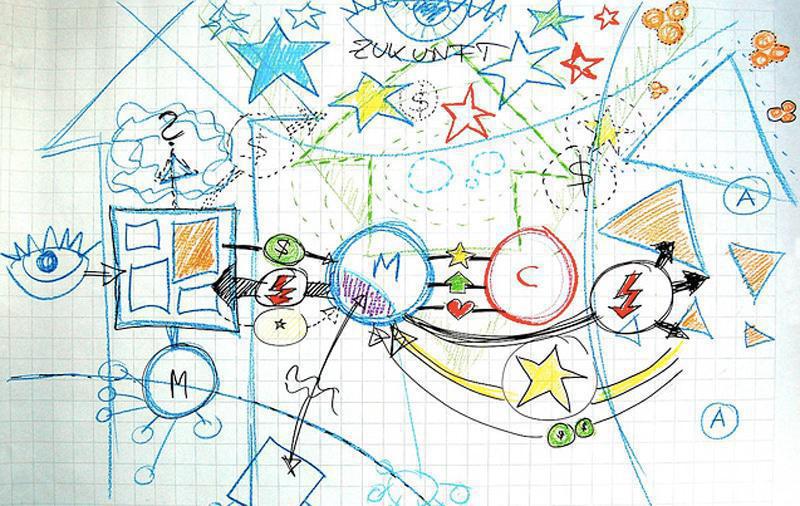
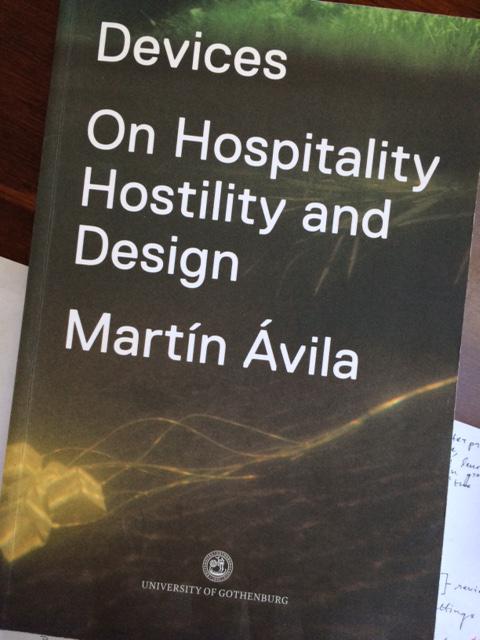
THIS EVENT IS POSTPONED UNTIL FURTHER NOTICE Speakers: Dr. Martín Ávila (Design for Sustainable Development at Konstfack Art and Design Institute in Stockholm) and Dr. Henrik Ernstson (African Centre for Cities, University of Cape Town & KTH Environmental Humanities, Division of History of Science, Technology and Environment, KTH Royal Institute of Technology, Stockholm).    Based in the emergent practices around speculative design, the seminar will depart from Dr. Martín Ávila’s thesis “Devices” that explored the notion of hospitality and hostility in design ecologies, i.e. the assemblages between human and non-human agents that have emergent properties which we cannot fully control. This will lead into a discussion of the present project “Tactical Symbiotics”  to which Dr. Henrik Ernstson is also contributing. The  project Tactical Symbiotics searches for tactics that can reinforce the interdependence between cultural and biological variation and diversity through cooperation and/or togetherness between humans and non-humans. Move beyond the comfort zone: three speculative designs During 2014, Dr. Ávila has worked in Argentina and developed three sub-projects called Doomestics, Dispersal Machines, and Spices/Species. These projects  are organized around questions such as: What if individual households would become parts of a decentred industry that capitalises on humans’ negative emotions to certain animals? What if agricultural machines would maintain the diversity of local ecosystems, helping birds and insects pollinate and fertilize, while producing food for humans? What if we could develop affection for insects and parasitoids that participate in the lifecycles of domestic plants? The projects are design-driven and uses speculative philosophy to make explicit alternative versions of the present or near future. By focusing on relations between humans and natural-artificial systems, the projects strives to de-centre anthropocentric viewpoints to become a platform from which to provoke a possibility to reimagine everyday life. Doomestics work with the tension established by the ecological need (if we are to maintain biological diversity) to cohabit with beings that are perceived as dangerous, undesirable or disgusting. Among them, spiders, scorpions and bats, to name a few. The project stages a series of products that make these beings visible and integrate them in different ways to everyday urban life. Dispersal Machines proposes interventions in agricultural systems that most humans have no direct relationship to. This project conceives machines that complement, supplement and/or maintain the activities of beings that participate in different natural processes such as the dispersion of seeds or pollen, or the secretion of nutrients to the soil. Spices/Species addresses an intimate level of human relationship with nonhuman beings. This concerns plants eaten as food or used for medicinal purposes and the ecosystem functions they perform through forms of symbioses with, for example, insects and parasitoids. The projects sketch and engage a diversity of responses that range from the intimate, to completely detached human-nonhuman relations. They still have in common that they affect the diversity of, and our relationship to, urban and agro-ecosystems. By confronting us with alternative realities—and alternative emotions, feelings and shivers—the project aims to open up new, and perhaps surprising ethical and moral dimensions to revalue and re-evaluate our present relations with non-humans.   The project strives to formulate a different response to our planetary ecological crisis than those strategies that often sort under terms like “ecosystem services” or “natural resources”. One inspiration for the project can be found in how Michel De Certeau spoke of tactics as practices that evade strategies of power. The seminar will present underlying theory and practical design projects. ---- Martín Avila is a Researcher, and Senior Lecturer in Design for Sustainable Development at Konstfack in Stockholm, Sweden. Martin obtained a PhD in design from HDK (School of Design and Crafts) in Gothenburg, Sweden, and has published his thesis entitled Devices. On Hospitality, Hostility and Design (2012). The PhD work was awarded the 2012 prize for design research by the The Swedish Faculty for Design Research and Research Education. Currently working (2013-2016) on a postdoctoral project financed by the Swedish Research Council: Symbiotic tactics. Design interventions for understanding and sensitizing to ecological complexity.