Sanitation politics in Mumbai and Cape Town

Davies Reading Room Room 2.27, Environmental and Geographical Science, UCT, Cape Town, Western Cape, South Africa

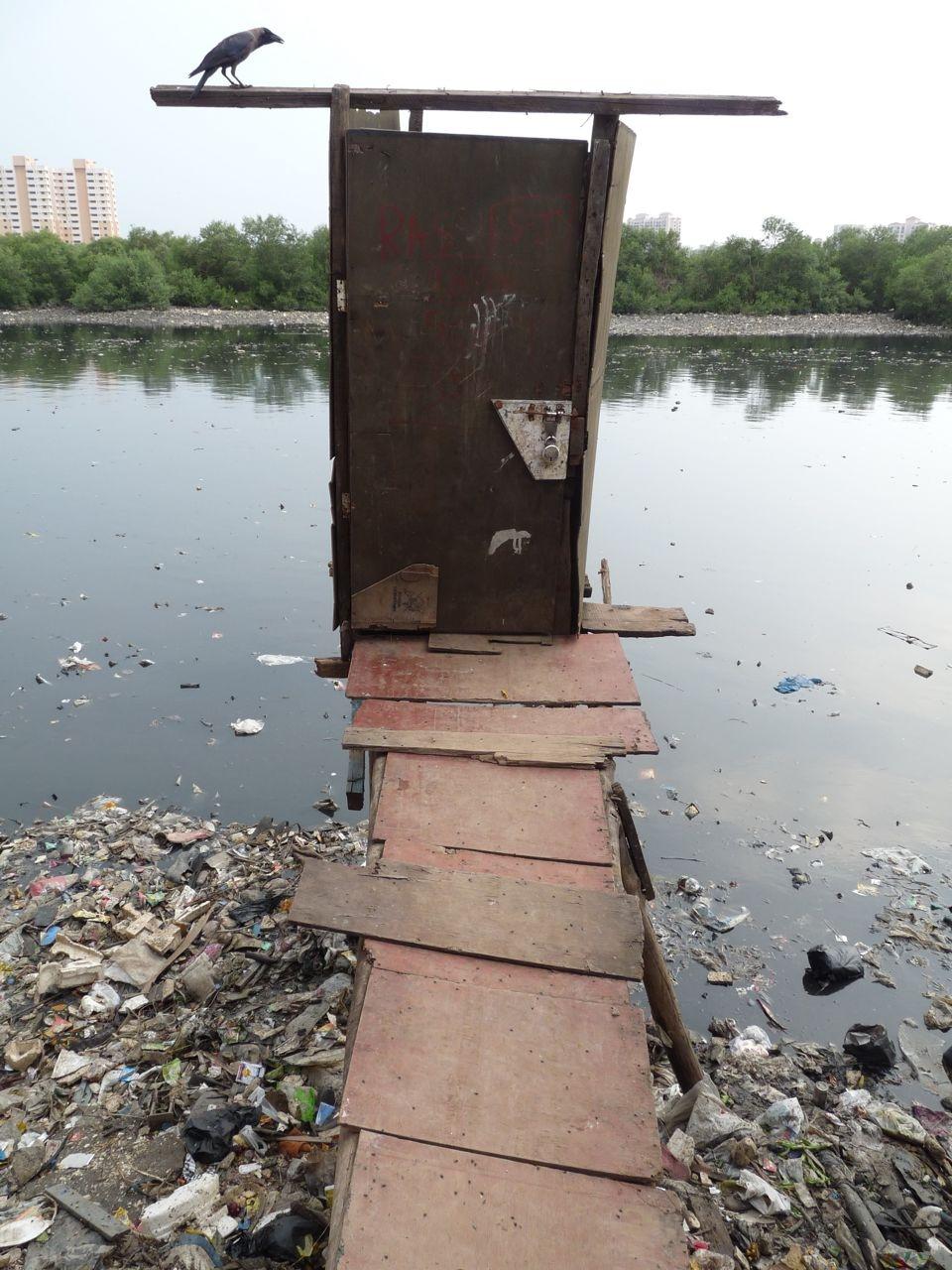
In this talk, Colin McFarlane and Jonathan Silver will reflect on  their past work in Mumbai and their new research on the politicisation of sanitation in Cape Town, with particular reference to the ‘poo protests’. Colin will reflect on his work in the politics of sanitation in Mumbai's informal settlements. He will draw out some key processes through which sanitation is organised in Mumbai, and the politics around that, as well highlighting some of the theoretical challenges the research presented for thinking about infrastructure and other strands of urban theory.   He will also briefly reflect on emerging work on the politics of sanitation in Cape Town. Their aim is to deepen understanding of how sanitation is politicised in cities, and to contribute to debate and ongoing work on sanitation politics in Cape Town. The objectives are to: examine why and how the ‘poo protests’ emerged in Cape Town; investigate why they took the form that they did; and contextualise the protests in the wider debates about service delivery, urban politics, and social justice in Cape Town.  They will conduct the research through interviews with a range of relevant actors including residents, civil society groups, municipal officials, academics and political parties. The research builds on McFarlane’s work in India on the politics of urban sanitation, and Silver’s work on the politics of urban infrastructure in South Africa. These previous research projects examined often ignored everyday experiences of sanitation and infrastructure and used the findings in discussions with municipal officials and civil society groups. Colin McFarlane is an urban geographer whose work focusses on the experience and politics of informal neighbourhoods. This has involved research into the relations between informality, infrastructure and knowledge in urban India and elsewhere. A key part of this has been a focus on the experience and politics of sanitation in informal settlements in Mumbai, which was part of an Economic and Social Research Council ethnographic project on the everyday cultures and contested politics of sanitation and water in two informal settlements. His current work examines the politicisation of informal neighbourhoods in comparative perspective, including African and South Asian cities.

Wake up, this is Joburg!!!

Davies Reading Room Room 2.27, Environmental and Geographical Science, UCT, Cape Town, Western Cape, South Africa

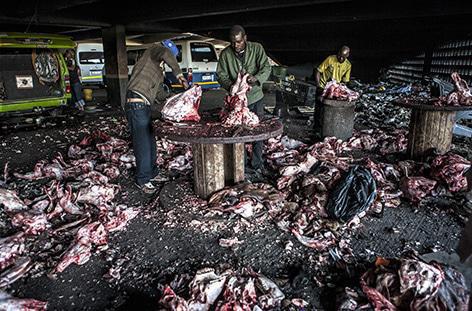
WAKE UP, THIS IS JOBURG: ORDINARY TO OUTRAGEOUS ETHNOGRAPHIES OF URBAN LIFE, is a series of ten photobooks by Tanya Zack and Mark Lewis about the city we hate to love but do anyway. Wake up, this is Joburg tells the stories of ten ordinary, interesting, odd or outrageous denizens of the city of Johannesburg. The series is published by Fourthwall Books (www.fourthwallbooks.com or www.facebook.com/fourthwallbooks). Note:  A limited number of the four titles will be available for sale at the Brown Bag at R150 each, cash only. Tanya Zack will talk to some of the stories of intersections of particular lives, livelihoods and spaces that make up the first four titles in this series. These are: Skop: S’kop  takes readers into a disused parking garage in the inner city, where cow heads are being chopped. It explores the informal business of chopping cow heads the stories of ‘the butchers and traders and entrepreneurs who have made this business uniquely theirs, speak of the hardships of their work in the meat trade and the occasional rewards of making it on their own. Zola: Under the Mooi Street off-ramp is an overflow rank for taxis waiting between peak hours to ferry people between the inner city and Zola, Soweto. Here entrepreneurs cater all day to the needs of drivers from an array of mobile and stationary stalls, selling food and snacks, socks, window wipers, mobile phone attachments and bumper stickers with messages like ‘You also drive like shit so fuck off’. Tony Dreams in Yellow and Blue: In the nondescript working class suburb of Turffontein, which has always hosted migrants, a restless outsider artist is at work transforming his home into a veritable castle of lights, turrets, murals, manikins and stairways. He is an obsessive collector of ‘waste’, but also an entrepreneur whose property is home to 17 rent-paying households. Inside Out: This is a story of low-end globalisation—of food and other commodities traded and retailed informally across South Africa’s borders by people using the same principles as multinationals, but with no formal credit or banking facilities.   Tanya Zack is a town planner. Her major areas of focus have been in housing research and policy development, community participation and evaluation of large scale development projects. She has worked within local government and as a private consultant, both on policy work and in practical projects. She has a close relationship to Wits University where she obtained a PhD for work on critical pragmatism in planning. Tanya grew up in the inner city suburbs of Johannesburg.Her current interest is in the narratives of entrepreneurs working in the Johannesburg CBD. Image credit: Mark Lewis

Complicit masculinity on the African urban periphery

Davies Reading Room Room 2.27, Environmental and Geographical Science, UCT, Cape Town, Western Cape, South Africa

In her talk titled "Entrepreneurs and consumers: complicit masculinity on the African urban periphery", Dr Jordanna Matlon will explore the relationship between masculinity and work in the double context of protracted economic and political crisis in Abidjan, Côte d'Ivoire. She draws on participant observation fieldwork and interviews with men in Abidjan’s informal sector from 2008 to 2009, and is supplemented by visual data. Ivoirian men who engage in informal activities overwhelmingly claim that they cannot be viable marriage partners, and are thus incapable of achieving adult masculinity. "I examine two groups of men: political propagandists (orators) and mobile street vendors, to understand how men affirm themselves in the absence of steady and dignifying work", she says. Both groups rejected the wage-earning working ideal as “Francophone” and asserted alternative modalities of economic participation as “Anglophone” men: entrepreneurs or consumers. Orators used ties to President Laurent Gbagbo’s political regime to secure livelihoods and pursue entrepreneurial identities. Vendors bypassed the state and asserted consumerist models of black masculinity from across the African diaspora. I employ “complicit masculinity” to examine how a relationship to capital mediates masculine identity. In doing so I demonstrate how men’s desires to counter gendered socioeconomic exclusion generate consent toneoliberal capitalism. About the speaker Jordanna Matlon is a postdoctoral fellow at the Institute for Advanced Study in Toulouse and received her doctorate in Sociology from UC Berkeley in 2012. She uses participant observation, interviews and visual analysis to study the livelihoods and lifestyles of men in Abidjan, Côte d’Ivoire’s informal economy.  More generally, she is interested in questions of race and belonging in Africa and the African diaspora, and the ways “blackness” as a signifier – and in its intersection with gender, class, and national identity – illuminates understandings of popular culture, postcoloniality and neoliberalism in the contemporary city. Jordanna's work has appeared in Antipode, Contexts, Ethnography and Poetics, among other places, and she is currently preparing her book manuscript, tentatively titled “I will be VIP!”: Masculinity, Modernity and Crisis on the Neoliberal Periphery.   Video abstract: http://antipodefoundation.org/2014/02/17/narratives-of-modernity-masculinity-and-citizenship/

Streets can be more than they are: Exploring Open Streets

Davies Reading Room Room 2.27, Environmental and Geographical Science, UCT, Cape Town, Western Cape, South Africa

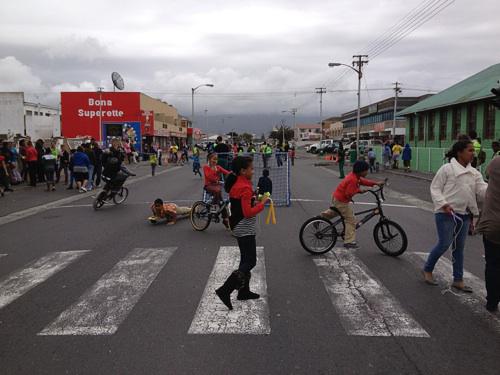
With origins in Bogota Colombia in the mid 1970s, “Open Streets” has become a global movement with increased growth in the past five years.

In the skin of the city: the street and its doubles

Davies Reading Room Room 2.27, Environmental and Geographical Science, UCT, Cape Town, Western Cape, South Africa

In this presentation, Anthropologist António Tomás (ACC's the 2014 Ray Pahl Fellow) will undertake to provide a layered description of the city of Luanda by engaging with a number of ethnographic vignettes based on his wanderings through the city. "Such a methodology has two sources" says Tomás. "First, I draw on the modernist figure of the flâneur as it was proposed by Charles Baudelaire and theorized by Walter Benjamin. Second, I also draw on the methods for wandering in the city (later on theorized by de Certeau) that was called psycho-geography by the situationists. I use this methodology in reference to the situationists who developed it as a way to ‘deconstruct' Le Corbusian’s modernist ambitions in transforming Paris." This exercise allows Tomás to provide a description not only of the surface of the city (or the city from the surface), but to also find a vantage point to “deconstruct” Luanda's colonial and postcolonial imaginaries. By annalyzing the prevailing practices of anonymous Luandans who give names to streets that disavowal their official designations, he gains a further understanding of the surface of the city that goes beyond its own (modernist) visibility. About the author António Tomás received his doctoral degree in Anthropology from Columbia University, New York. He is the author of a study on the African nationalist Amílcar Cabral titled O Fazedor de Utopias: Uma Biografia de Amílcar (The Maker of Utopias: A Biography of Amilcar Cabral (Lisbon ; Praia , Tinta da China; Spleen, 2007; 2008).  Tomás is the 2014 Ray Pahl Fellow at the African Centre for Cities, working on a book called In the skin of the city: Luanda, or the dialectics of spatial transformation.

Cape Town’s new Development Charges Policy for Engineering Services

Davies Reading Room Room 2.27, Environmental and Geographical Science, UCT, Cape Town, Western Cape, South Africa

The City of Cape Town has recently approved a new Development Charges Policy for Engineering Services.  This policy pins down some vexing questions.   When land use intensifies the municipality has to increase its infrastructure networks to accommodate the increased demand for services.  There is always a cost to the city, but who should cover that cost: the developer or the body of ratepayers as a whole?  How should the municipality calculate that amount?  Should socially beneficial land use changes, like low-income housing have to pay the same as land use changes that are commercially driven?  Should there be a different method of calculating this amount for small or emerging businesses as opposed to big businesses?  Why can’t the costs of extending the infrastructure networks be covered through monthly tariffs for the different services? Nick Graham and Stephen Berrisford have been part of the professional team, headed by AECOM, drafting the new policy for the City of Cape Town.  They are also working on the National Treasury’s process to develop national law and policy on the subject.  They will share their experiences at the ACC’s Brown Bag session and explain the rationale behind the new policy as well as identify some of the implications for the city of the new approach. Nick Graham is a Director at PDG, responsible for the Urban Systems Practice Area. He is an urban geographer and registered professional engineer with Masters degrees in civil engineering, environmental policy and urban geography. Stephen Berrisford is an independent consultant specialising in the legal and policy frameworks governing urban land and development. He is trained as a lawyer and urban planner, with degrees from the Universities of Cape Town and Cambridge. He works primarily in southern and eastern Africa as well as on global initiatives for agencies such as UN-Habitat, Cities Alliance and the World Bank. Stephen is an adjunct associate professor at the African Centre for Cities at the University of Cape Town and visiting professor at the University of the Witwatersrand. He was the governance coordinator for the Urban Land Markets Programme Southern Africa (Urban LandMark), a UK aid-funded think tank focused on making urban land markets in southern Africa work better for the poor. Image credit: Barry Christianson

Political and Affective Ecologies of the City

Davies Reading Room Room 2.27, Environmental and Geographical Science, UCT, Cape Town, Western Cape, South Africa

In her talk, Dr Karen Till will explore the limitations and possibilities of considering urban ecology as a means to 'think the city differently'. Her starting premise is simple: how might we begin to challenge dominant paradigms in urban theory, including resilience and neoliberal speculative urbanisms, that define ground merely as property and contain time according to desire and fear? Using examples from cities around the world, the talk will address the concept of the wounded city and a place-based ethics of care according to intersecting urban temporal and spatial meshworks that include: social and material environments, relational networks, local pathways, alternative exchange systems, affective ecologies, enacted assemblages, and urban ecosystem wholeness. About the speaker Dr. Karen E. Till is Senior Lecturer in the Department of Geography at the National University of Ireland at Maynooth. A cultural and urban geographer, Karen is working on a book entitled 'Wounded Cities'. It is a comparative ethnographic project about cities marked by histories of state-perpetrated violence, with case studies in Berlin, Bogota, Cape Town and Dublin. Required Reading Wounded Cities 2012

Ronald Wall: Investment flows into African & European cities

Davies Reading Room Room 2.27, Environmental and Geographical Science, UCT, Cape Town, Western Cape, South Africa

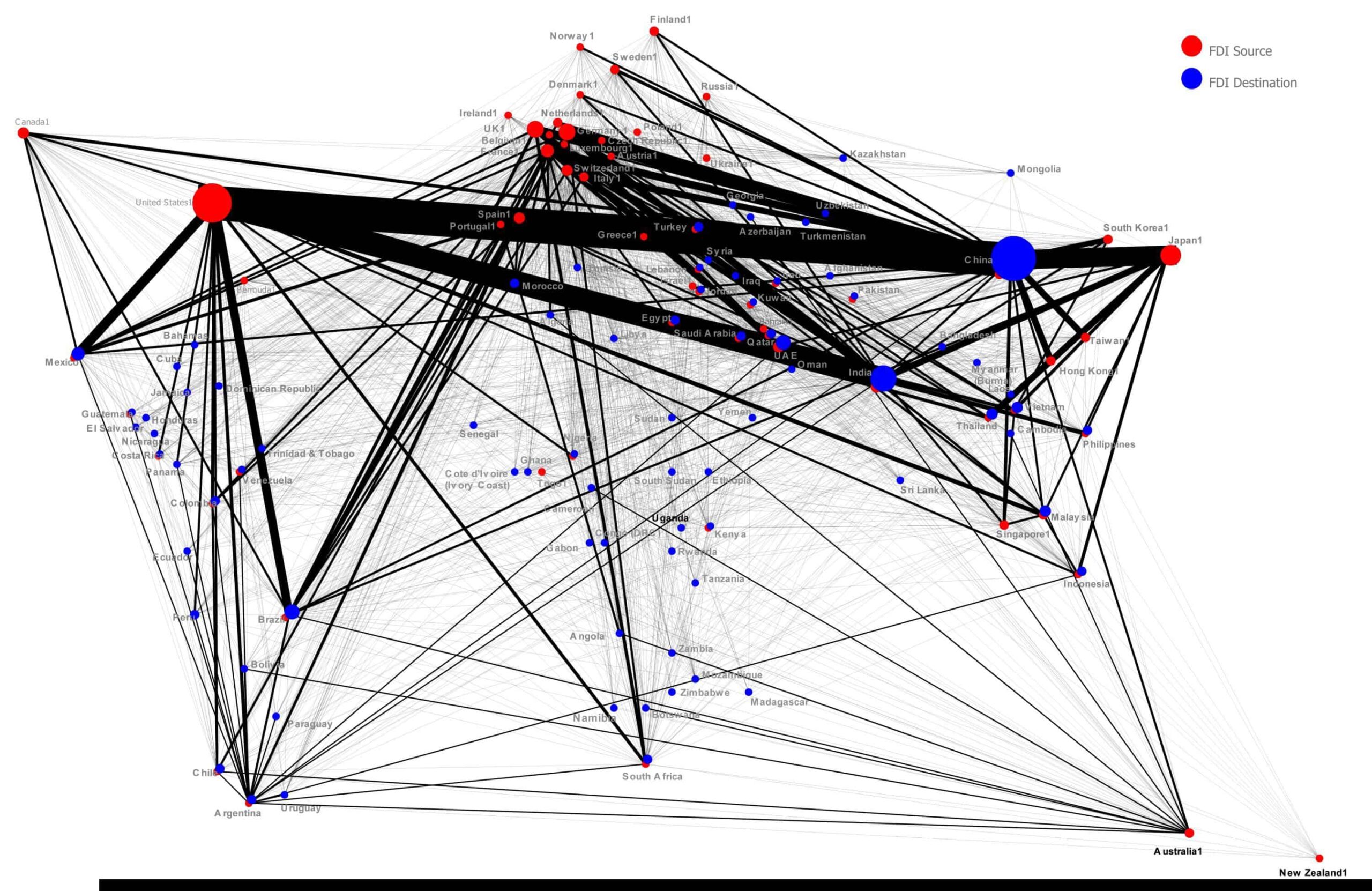
South Rising? Exploring ten years of investment flows into African and European countries and cities. An empirical analysis, comparing ten years of investment flows into African and European countries and cities. It is also shown which social, economic and spatial location factors are important for attracting these investments and how these differ across the two regions. It includes GIS mapping of the networks and econometric results. This will be followed by a discussion on how African cities could use this type of knowledge for development strategies.

Towards Accessible Urban Areas

Davies Reading Room Room 2.27, Environmental and Geographical Science, UCT, Cape Town, Western Cape, South Africa

Towards Accessible Urban Areas for Persons with Disabilities: Over 600 million people, approximately 10% of the world’s population, have some type of a disability. In developing countries, due to the two fold correlation between disability and poverty, up to 20% of the population has a disability. Due to structural, environmental and attitudinal barriers they continue to face, persons with disabilities are often prevented from fully participating in the economic and social life, leading to their further impoverishment. Amidst a wide array of tools used to enable the full participation in the society of persons with disabilities, accessibility and universal design are of significant importance when it comes to urban planning. This presentation focuses on transport and infrastructure within the urban setting, and aims to further the understanding of the mobility and access issues experienced by persons with disabilities in developing countries, and to identify specific steps that can be taken to start addressing problems. About the speaker Maša Anišić is a doctoral candidate at the Scuola Superiore Sant’Anna in Italy. Her doctoral thesis examines the UN Convention on the Rights of Persons with Disabilities and the impact of its innovative architecture on the stronger social, economic and cultural rights fulfillment for persons with disabilities.

Policy & Governance Contexts for Scalable Community-Led Slum Upgrading

Davies Reading Room Room 2.27, Environmental and Geographical Science, UCT, Cape Town, Western Cape, South Africa

The presentation first addresses the policy and governance contexts for the scalability of community-led slum upgrading based on the Shack/Slum Dweller International methodology. The methodology is based on that of the Indian Alliance (NSDF, Mahila Milan, SPARC), which comprises community-based organizations and NGOs, in partnership with government, delivering municipal services, securing tenure and promoting slum upgrading. The presentation continues with the role of the Pune and Mumbai community-led toilet block precedents in South-South knowledge exchange. About the speaker Richard Tomlinson is Chair in Urban Planning in the Faculty of Architecture Building and Planning at the University of Melbourne. Before going to Australia he served as an urban policy consultant in Southern Africa and as an academic in South Africa and the USA. His clients included the post-apartheid South African government, and provincial and local governments, The World Bank, USAID, UN Habitat international and local NGOs, and also the private sector. As an academic he has served as a Visiting Professor at the University of the Witwatersrand and Columbia University, as a Visiting Scholar and SPURS Fellow at MIT, and a Guest Scholar at the Brookings Institution. His most recent publications, research and teaching concern the effects of Google and social media on urban policy knowledge products; urban policy processes and ‘international best practice’; slum upgrading; the BRICS and the urban legacy of sports mega events; and housing and the Australian city. His most recent book is an edited publication on Australia’s Unintended Cities: The Impact of Housing on Urban Development.