ACC NOTRUC Seminar Series: Contesting the Coast: Infrastructure, Ecology and Coastal Planning in New Orleans and the Mississippi River Delta – Cancelled

Studio 3 ENGEO Building, Upper Campus. University of Cape Town,, Cape Town, Western Cape, South Africa

This seminar focuses on environmental politics and regional urban planning based on a paper by Dr Joshua Lewis and Dr Henrik Ernstson called Contesting the Coast: Infrastructure, Ecology and Coastal Planning in New Orleans and the Mississippi River Delta. The paper is presented by Dr Henrik Ernstson who works at ACC and is affiliated to KTH Royal Institute of Technology and The University of Manchester. The presentation will take place on 8 November 2017, at 15:00 in Studio 3, Environmental and Geographical Sciences Building, Upper Campus, University of Cape Town. Please note this seminar has been cancelled.  ABSTRACT For over 150 years two major and capital-driven projects have re-worked the vast Louisiana coastal landscape. One has centered on ‘adapting’ the landscape to compete and increase for global maritime trade, shortening the time distance from New Orleans to the Gulf of Mexico. The second has been about increasing the amount of space for real estate and urban development. However, developing large-scale water infrastructure in a vast and complex ecosystem comes with unexpected social and ecological dynamics. Indeed, our argument is that infrastructure has changed biophysical relations that have been stable for hundreds and thousands of years to fundamentally change how ecosystems operate and function with social and ecological effects. Based on in-depth historical research, we develop an analytical repertoire for understanding historical interrelationships between water infrastructure, regional environmental politics, and large-scale coastal ecosystems. By further drawing on planning theory that has striven to de-center Habermasian consensus approaches (e.g., Vanessa Watson), this paper focuses on how knowledge controversies can help not only to ‘slow down reasoning’ (sensu Isabelle Stengers and Sarah Whatmore) to include more textured and situated ways of knowing the vast and complex Louisiana coastal landscape, but also drives the making of proper political subjects (Jacques Rancière) that can interrupt and shape the wider administration of large-scale planning efforts. Our analysis shows how water infrastructure has produced persistent divisions in the body politic to hinder contemporary strategies to secure New Orleans and other settlements in the region from devastating storm surge and inundation. In a world under climate change, when novel biophysical dynamics are constantly introduced, we believe our textured case study can help to think about the new kind of politics we need to understand, from the role of ‘ecological expertise’ (now siding increasingly with ‘engineering expertise’), to how ecological dynamics are shaping political subjectivities.   MORE ON JOSHUA LEWIS & HENRIK ERNSTSON  Dr Joshua Lewis is based in New Orleans where he studies how infrastructure networks transform regional ecosystems and its effects on environmental justice and political processes. His historically grounded focus on the implementation and maintenance of large-scale water infrastructure connects between the local and the regional and across human geography, ecology and sociology. He has also developed comprehensive vegetation studies in New Orleans (linked to a comparative study in Cape Town) to understand how hurricanes and urban development shape urban ecosystems and its often-unequal effect on different social groups. He completed his PhD at the Stockholm Resilience Centre at the Stockholm University in 2015 and he is now employed at Tulane University as Research Assistant Professor at the ByWater Institute where he is leading a novel ecological monitoring project in New Orleans that tracks ecological changes associated with a major green infrastructure and stormwater management project. With his studies in political ecology and urban ecology, he also networks with partners in the Rockefeller Foundation’s 100 Resilient Cities program to deepen knowledge exchanges around urban ecology in partner cities. For more information, go here: publications.   Dr Henrik Ernstson is developing a situated approach to urban political ecology that combines critical geography, urban infrastructure studies, postcolonial urbanism and collaborations with designers, artists and activists. He has lead various projects to study collective action, environmental conflicts and urban ecosystem management in Cape Town, New Orleans and Stockholm, and infrastructure politics in Kampala. Currently he is finalizing two edited books for MIT Press and Routledge, “Grounding Urban Natures” (Ernstson & Sörlin) and “Urban Political Ecology in the Anthropo-Obscene” (Ernstson & Swyngedouw). With Jacob von Heland he has created the research-based cinematic ethnography film “One Table Two Elephants,” a film that richly surfaces the politics of nature, race, and history in a postcolonial city (71 minutes, screening 2018). In 2017 he was awarded The AXA Research Award for recognition of his innovative work on urban sustainability in the global South, which will fund a research group to study petro-urbanism and urban infrastructure in Luanda with South-South connections to Brazil and China. He holds a PhD in Natural Resource Management from Stockholm University (2008) with postdoctoral positions at Stanford University (2013-2015) and the University of Cape Town (2010-2011). He lives in Cape Town and works at the African Centre for Cities, while holding a Research Fellowship at the KTH Royal Institute of Technology in Stockholm contributing to KTH Environmental Humanities Laboratory. In August 2017 he joined The University of Manchester as part-time Lecturer in Human Geography. For more information, go here: publications and projects.  
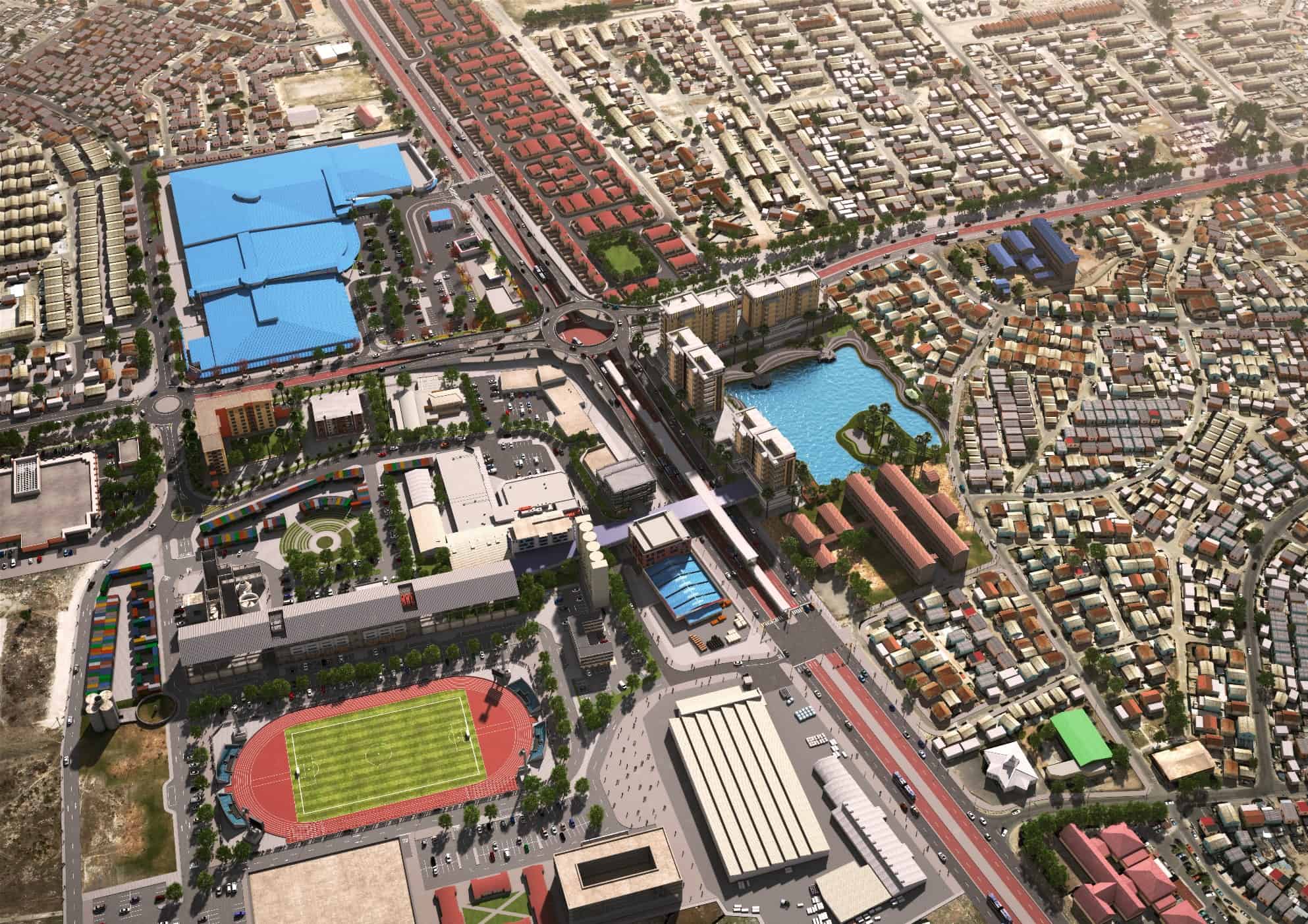
Socio-Spatial Transformation Seminar Series: TOD in Cape Town

Studio 3 ENGEO Building, Upper Campus. University of Cape Town,, Cape Town, Western Cape, South Africa

The next seminar in the ACC’s Socio-Spatial Transformation Seminar Series will take a closer look at the City of Cape Town’s plans for Transit-Oriented Development (TOD).

ACC/ AFD Symposium on Informal Settlements, Slums and Precarious Neighbourhoods

Studio 3 ENGEO Building, Upper Campus. University of Cape Town,, Cape Town, Western Cape, South Africa

The African Centre for Cities (ACC) and Agence Française de Développement (AFD) host a one-day symposium on the AFD book Rethinking Precarious Neighbourhoods edited by Professor Agnès Deboulet, the work of ACC’s Urban Violence, Safety and Inclusion CityLab coordinated by Dr Mercy Bown-Luthango, and the work of the Sustainable Human Settlements CityLab coordinated by Liza Cirolia.

Luxified skies: How vertical urban housing became an elite preserve

Studio 3 ENGEO Building, Upper Campus. University of Cape Town,, Cape Town, Western Cape, South Africa

The African Centre for Cities and the School of Architecture, Planning and Geomatics are pleased to co-host a Special Lecture by Prof Stephen Graham entitled 'Luxified skies: How vertical urban housing became an elite preserve'. Abstract This talk is a call for critical urban research to address the vertical as well as horizontal aspects of social inequality. It seeks, in particular, to explore the important but neglected causal connection between the demonisation and dismantling of social housing towers constructed in many cities between the 1930s and 1970s and the contemporary proliferation of radically different housing towers produced for socio-economic elites. The argument begins with a critical discussion of the economistic orthodoxy, derived from the work of Edward Glaeser, that contemporary housing crises are best addressed by removing state intervention in housing production so that market-driven verticalisation can take place. The following two sections connect the rise of such orthodoxy with the ‘manufactured reality’—so central to neo-liberal urban orthodoxy—that vertical social housing must necessarily fail because it deterministically creates social pathology. The remainder of the paper explores in detail how the dominance of these narratives have been central to elite takeovers, and ‘luxification’, of the urban skies through the proliferation of condo towers for the superrich. Case studies are drawn from Vancouver, New York, London, Mumbai and Guatemala City and the broader vertical cultural and visual politics of the process are explored. The discussion finishes by exploring the challenges involved in contesting, and dismantling, the hegemonic dominance of vertical housing by elite interests in contemporary cities. Bio Stephen Graham is Professor of Cities and Society at Newcastle University's School of Architecture, Planning and Landscape. He has an interdisciplinary background linking human geography, urbanism and the sociology of technology. Since the early 1990s Prof. Graham has used this foundation to develop critical perspectives addressing how cities are being transformed through remarkable changes in infrastructure, mobility, digital media, surveillance, security, militarism and verticality. His books include Splintering Urbanism; Telecommunications and the City (both with Simon Marvin); the Cybercities Reader; Cities, War and Terrorism; Disrupted Cities: When Infrastructures Fail; and Infrastructural Lives (with Colin McFarlane). Prof Graham’s 2011 book Cities Under Siege: The New Military Urbanism was nominated for the Orwell Prize in political writing and was the Guardian’s book of the week. His new book - Vertical: The City From Satellites to Bunkers (Verso) – was published in November 2016. Another Guardian book of the week, it was in the books of the year lists of both the FT and the Observer.

What must be our urban question? Reflections on Contemporary Urban Knowledge from Delhi

Studio 3 ENGEO Building, Upper Campus. University of Cape Town,, Cape Town, Western Cape, South Africa

ACC is delighted to be hosting Gautam Bhan from the Indian Institute of Human Settlements who will be giving a seminar as part of our socio-spatial transformations seminar series. The seminar is entitled 'What must be our urban question? Reflections on Contemporary Urban Knowledge from Delhi'. About The fact of urbanization no longer needs assertion. Today, our problem is of an excess of speech. What do we talk about when we talk about the urban? Cities? Built Form? Economic Agglomerations? Violence? Modernity? Democracy? Nature? Infrastructure? Transport? As each of us – citizens, theorists, practitioners, policy makers – seeks to grasp the urban, we find ourselves navigating multiple and often competing visions of cities that seek to be smart, inclusive, resilient, sustainable, world-class, ordinary, and global all at once.  This talk reflects on how we must think of the urban in the moment of its emergence. It asks: what are the knowledge systems, cultures and practices that we need to in order live, survive and intervene into our city-regions?  It does so at a moment when the urban question is once again up for global debate, challenged to cross disciplines, offer knowledge for urgent and transformative practice to address a maddening diversity of issues from inequality to sustainability. It does so, in line with new theoretical thinking from the “south,” by beginning and rooting from place, asking questions of urban theory and practice from one its most challenging sites: the city of New Delhi. In doing so, it also takes on the task of imagining what a decolonisation of urban studies can look like. Bio Gautam Bhan has a BA from Amherst College and an MA from the University of Chicago in urban sociology. He has worked as a Research Fellow at the Society for Applied Studies, New Delhi, where is his first work was on gender and access to health in informal urban settlements and later focused on urban poverty in Indian cities and particularly on questions of eviction, resettlement and poverty within urban development. He is the author of Swept off the Map: Surviving Eviction and Resettlement in Delhi and most recently of This is Not the City I Once Knew: Evictions, Urban Citizenship and the Right to the City in Millennial Delhi (Environment & Urbanisation, Vol. 21 (1), 2009). He is also a columnist with the Indian Express, one of India’s leading English language newspapers, where he writes on urbanisation and urban issues in India. His ongoing research at Berkeley focuses on the changing politics of citizenship and poverty in post-liberalisation Indian cities. He was awarded the prestigious Berkeley Fellowship for 2008-2012 to support his doctoral studies. He is also currently a 2009 IDRF fellow of the Social Science Research Council, New York.

Invitation to the 3nd Seminar in the Spatial Transformation CityLab Series

Studio 3 ENGEO Building, Upper Campus. University of Cape Town,, Cape Town, Western Cape, South Africa

The Role of Affordable Housing in advancing Socio-spatial Transformation in Cape Town Cape Town’s spatial organisation is characterised by fragmentation; expressed in a separation of residential and employment spaces and low density urban sprawl. This imposes a considerable cost on the State, the environment and increases the socio-economic burden and exclusion of a great majority of the city’s residents. The provision of affordable housing in well-located areas is critical in fostering integration and improving the social and economic conditions of poor households in Cape Town. The next seminar in the ACC’s Socio-Spatial Transformation Series will seek to unpack what “Affordable Housing” means in Cape Town; given the diversity of housing need in the city and will provide an overview of some of the available housing instruments. It will also consider how these speak to the imperatives of socio-spatial transformation and sustainability.   Speaker: Ms. Kahmiela August, Director of Affordable Housing - Western Cape Provincial Department of Human  Settlements Ms August is responsible for the management of the Affordable Housing Directorate, which incorporates Gap and the Rental Housing provision for persons earning between R1 500 – R3 500. The directorate is also responsible for Social Housing Programme. Functions include; project packaging, pipelining and approval, Integrated settlement planning, policy review and implementation.   The team is also overseeing the development of the departmental partnership strategy. Please RSVP to Mercy Brown-Luthango on mercy.brown-luthango@uct.ac.za

Theorizing Urbanization: the Universal and the Particular in Question

Studio 3 ENGEO Building, Upper Campus. University of Cape Town,, Cape Town, Western Cape, South Africa

The African Centre for Cities is pleased to announce it's first Special Lecture for 2017. We will be hosting Prof Kevin Cox, who will be presenting a lecture on 'Theorizing Urbanization: The Universal and the Particular in Question'. Abstract Over the last twenty-five years or so urban studies has witnessed increasing skepticism towards universalizing claims and a greater interest in the particularizing. Recent arguments for a view from the global South exemplify this. This raises the question of what the relationship between universalizing and particularizing tendencies might be. This is explored firstly through an exploration of how the two might be reconciled. Two case studies then follow. One focuses on the ‘view from the South’ controversy; and the other on the politics of urban development in the US and in Western Europe and a subsequent trans-Atlantic divide. Bio KEVIN R. COX, is Emeritus Distinguished University Professor of Geography at the Ohio State University. His major research interests include the politics of urban and regional development, geographic thought and South Africa. He is the author of numerous books, the most recent of which are The Politics of Urban and Regional Development and the American Exception (2016) and Making Human Geography (2014.) He has been a Guggenheim Fellow and the recipient of two awards from the Association of American Geographers, including one for distinguished scholarship. More information can be found on his website, Unfashionable Geographies, at https://kevinrcox.wordpress.com/.  

Finding Food in the post-2015 Development Agenda

Studio 3 ENGEO Building, Upper Campus. University of Cape Town,, Cape Town, Western Cape, South Africa

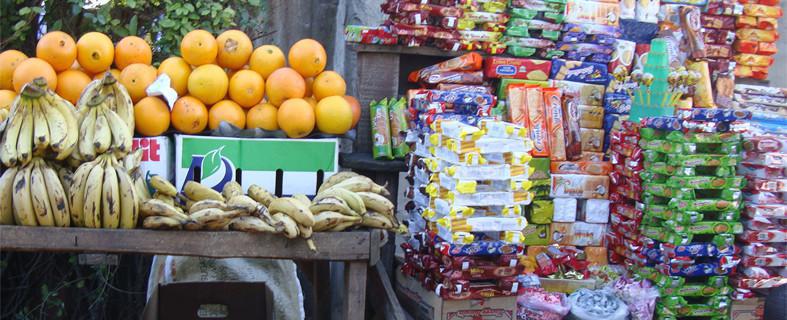
Food is fundamental not only to well-being, but to our social and economic lives. Despite this, one of the biggest challenges facing many people in cities all over the world today is hunger. As cities rapidly urbanise, different pressures are placed on the food system which has resulted in the least nutritious food being the most affordable. This seminar series will explore the informal economy, food systems, food security and urbanisation. This final seminar by Dr Jane Battersby explores the global implications of the post-2015 development agenda. Abstract Food has not historically been considered central to the urban agenda. However, good nutrition is essential for equitable growth and sustainable urban food systems are key to responding to many of the challenges posed to growing cities. In the wake of Habitat III, this seminar examines the gaps and opportunities to engage the food system as part of urban governance and planning that have emerged in the space generated by the SDGs and New Urban Agenda document. It draws on findings from AFSUN (African Food Security Urban Network) and the Consuming Urban Poverty project. Bio Jane Battersby is an urban geographer with an interest in all things food related. Her current areas of particular interest are urban food systems, urban food policies and the construction of food security theory in Northern and Southern research contexts. This work has both theoretical and applied components. Underpinning her food work is an ongoing interest in the linkages between spatial transformation and identity transformation in post-apartheid urban areas – a topic she has addressed through the lenses of youth identities, education, music and land restitution. Jane has been the Cape Town Partner of the African Food Security Urban Network (AFSUN) since 2008, and is currently the Research Co-ordinator of the ACC’s Consuming Urban Poverty Project, and is associated with the Hungry Cities Programme.

A systematic review of the literature that focuses on both the ‘informal economy’ and ‘food security’ in South Africa

Studio 3 ENGEO Building, Upper Campus. University of Cape Town,, Cape Town, Western Cape, South Africa

Food is fundamental not only to well-being, but to our social and economic lives. Despite this, one of the biggest challenges facing many people in cities all over the world today is hunger. As cities rapidly urbanise, different pressures are placed on the food system which has resulted in the least nutritious food being the most affordable. This seminar series will explore the informal economy, food systems, food security and urbanisation. The second seminar is entitled 'A systematic review of the literature that focuses on both the ‘informal economy’ and ‘food security’ in South Africa' presented by Candice Kelly and Etai Even-Zahav (Research Fellows at the Sustainability Institute). Abstract Despite the importance of the informal food economy in fulfilling the daily and weekly food needs of a large proportion of South Africa’s low-income population, it appears little research exists on the exact nature of the relationship between the informal food economy and food security. This paper performed the first qualitative systematic review of research from South Africa that addresses both these aspects. The methods used in the review are described in detail, to increase the readers’ ability to assess the reliability of subsequent findings and analysis. Findings confirmed the low level of research focus on the informal food economy (and food security), in particular the stages of the value chain beyond the farm gate and before the consumer. Food safety research is common, although applied narrowly and with mixed findings. The conceptualisation of nutrition research is encouragingly wide, encompassing both over- and under-nutrition, but does not seem to consider the broader urban informal context in which consumers are embedded. Lastly, the research approaches used are predominately quantitative, and the voices of those who survive within the informal food economy are largely absent. Bios Candice Kelly's doctoral research focuses on people leading food system transitions in South Africa. She teaches into the MPhil at the Sustainability Institute, focusing on sustainable food systems. Etai Even-Zahav is also part of the Food Systems team at the Sustainability Institute. He is particularly interested in the informal food economy.

The Informal Economy’s Role in Feeding Cities – a Missing Link in Policy Debates?

Studio 3 ENGEO Building, Upper Campus. University of Cape Town,, Cape Town, Western Cape, South Africa

Food is fundamental not only to well-being, but to our social and economic lives. Despite this, one of the biggest challenges facing many people in cities all over the world today is hunger. As cities rapidly urbanise, different pressures are placed on the food system which has resulted in the least nutritious food being the most affordable. This seminar series will explore the informal economy, food systems, food security and urbanisation. The first seminar is entitled 'The Informal Economy’s Role in Feeding Cities - A Missing Link in Policy Debates?' and will be presented by Caroline Skinner and Gareth Haysom. Abstract The paper starts by considering the genealogy of the term ‘informal sector’ and then reviews the international context – urbanisation trends and the latest estimates on the size and contribution of the informal economy. The former confirm Crush and Frayne’s contention of the likelihood of an urban future for the majority of Africans and latter suggest that informal work is a predominant source of non-agricultural employment on the most regions of the Global South. Attention is then turned to the South African informal economy, which although smaller than our developing country counterparts, is still a significant source of employment. The informal economy is thus playing a key role in household income – a key aspect of accessibility, particularly in urban areas. The paper then outlines the evidence on the informal economies role in food sourcing of poorer households. The paper critically assesses the current food security policy position in South Africa and the post-Apartheid policy response to the informal economy in general both nationally and in key urban centres. We trace a productionist and rural bias in the food security agenda and argue that the policy environment for informal operators is at best benign neglect and at worse actively destructive. Speaker bios Caroline Skinner is a Senior Researcher at the African Centre for Cities at the University of Cape Town and Urban Policies Research Director for the global action-research-policy network Women in Informal Employment: Globalizing and Organizing (WIEGO). For over 15 years, Skinner’s work has interrogated the nature of the informal economy with a focus on informing advocacy processes and livelihood-centred policy and planning responses. She has published widely on the topic. Dr Gareth Haysom holds a Ph.D in Environmental and Geographic Sciences from UCT. The focus of his Ph.D was on urban food system governance. Gareth is the southern cities project coordinator for the Hungry Cities Partnership project at the ACC. He also works on the Consuming Urban Poverty research project. Venue: Studio 3, EGS Building, Upper Campus, UCT